Rotomolded HDPE
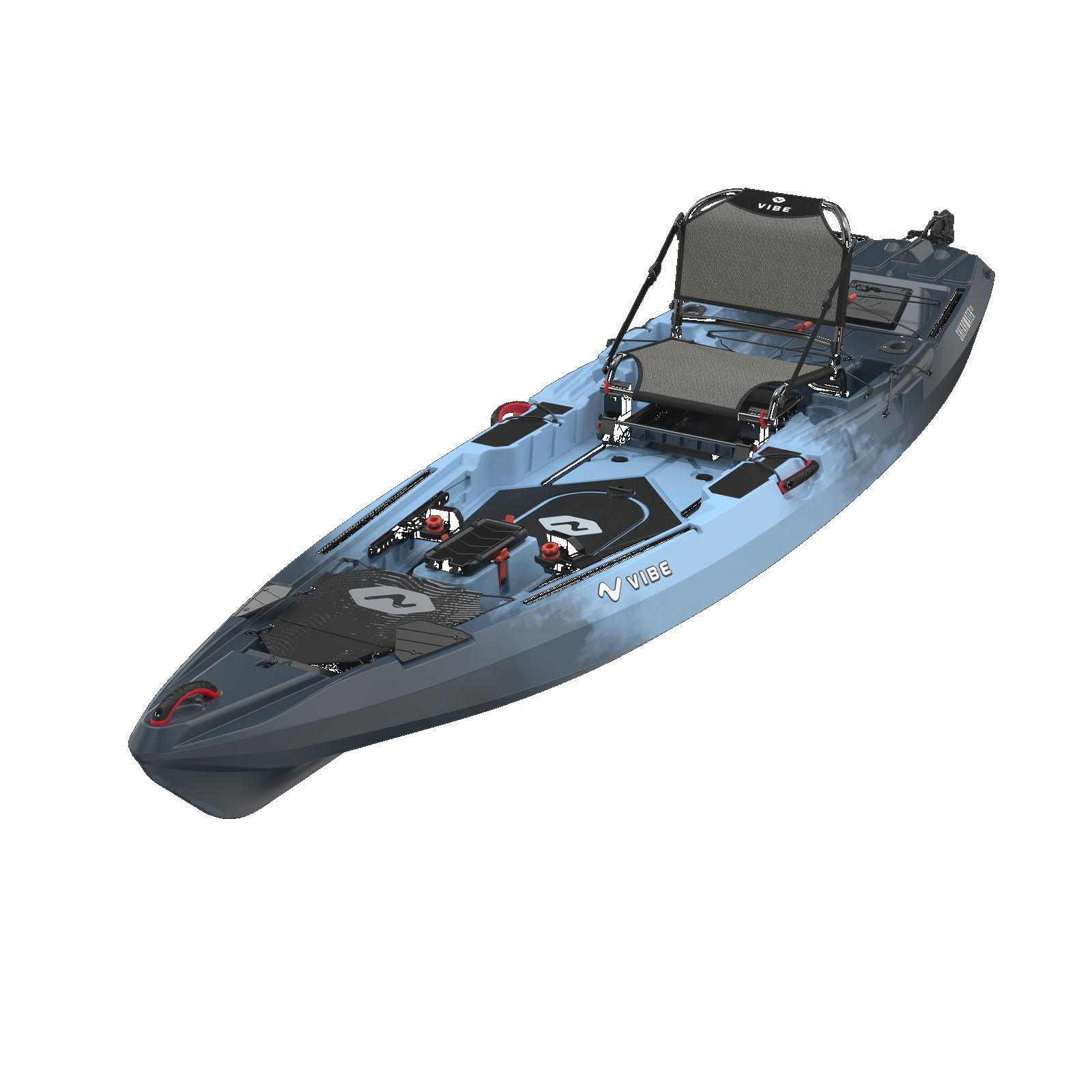
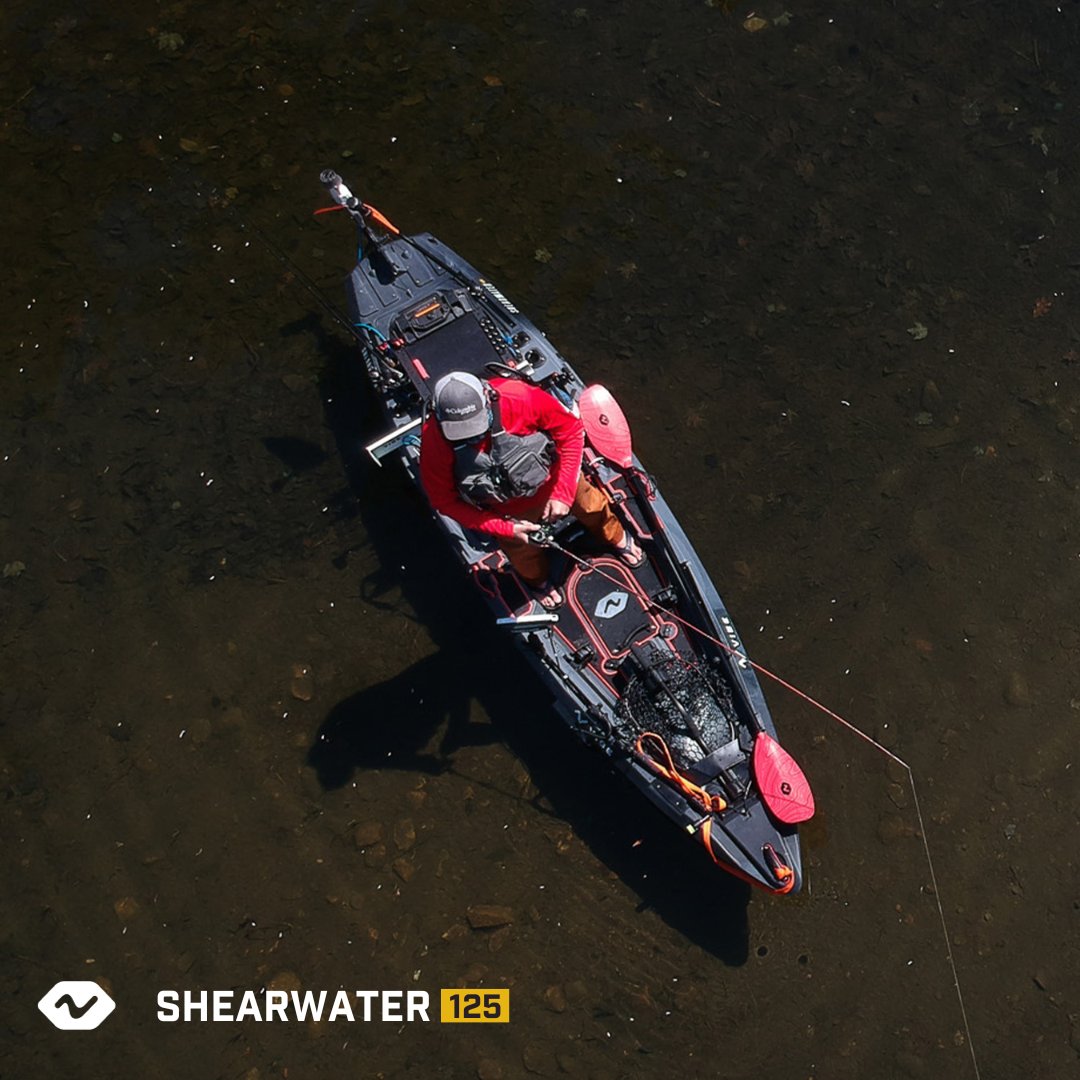
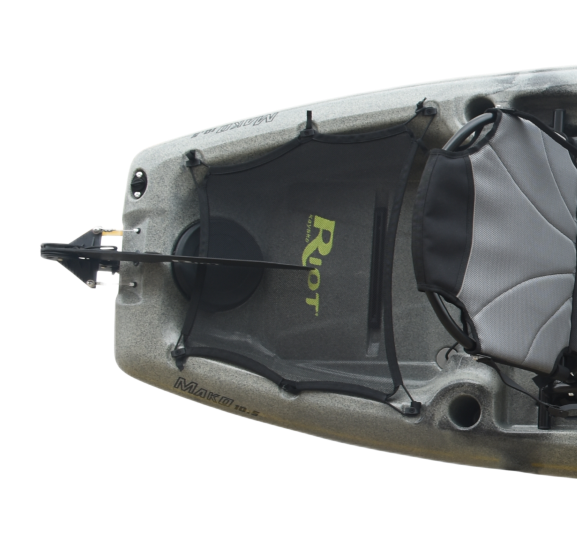
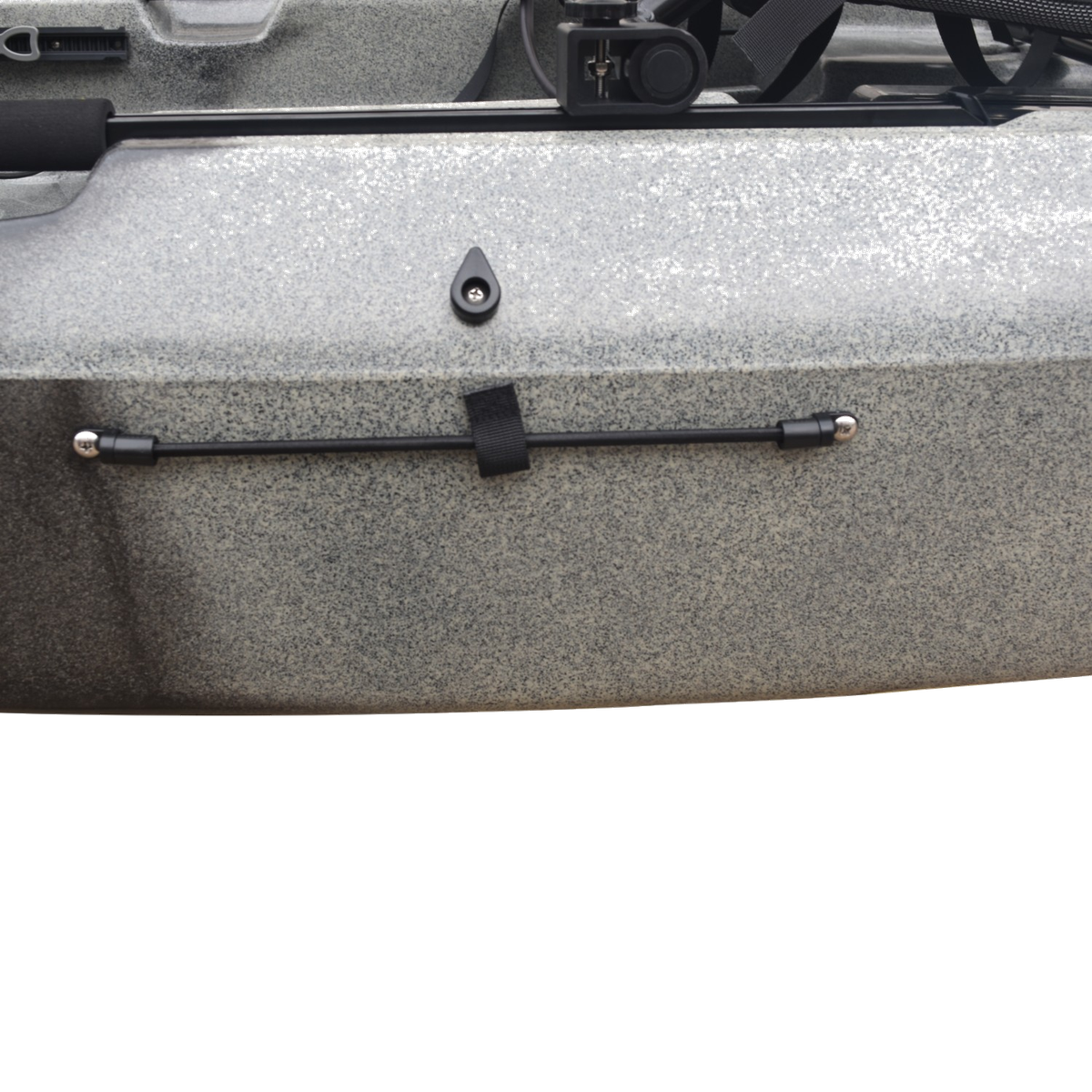
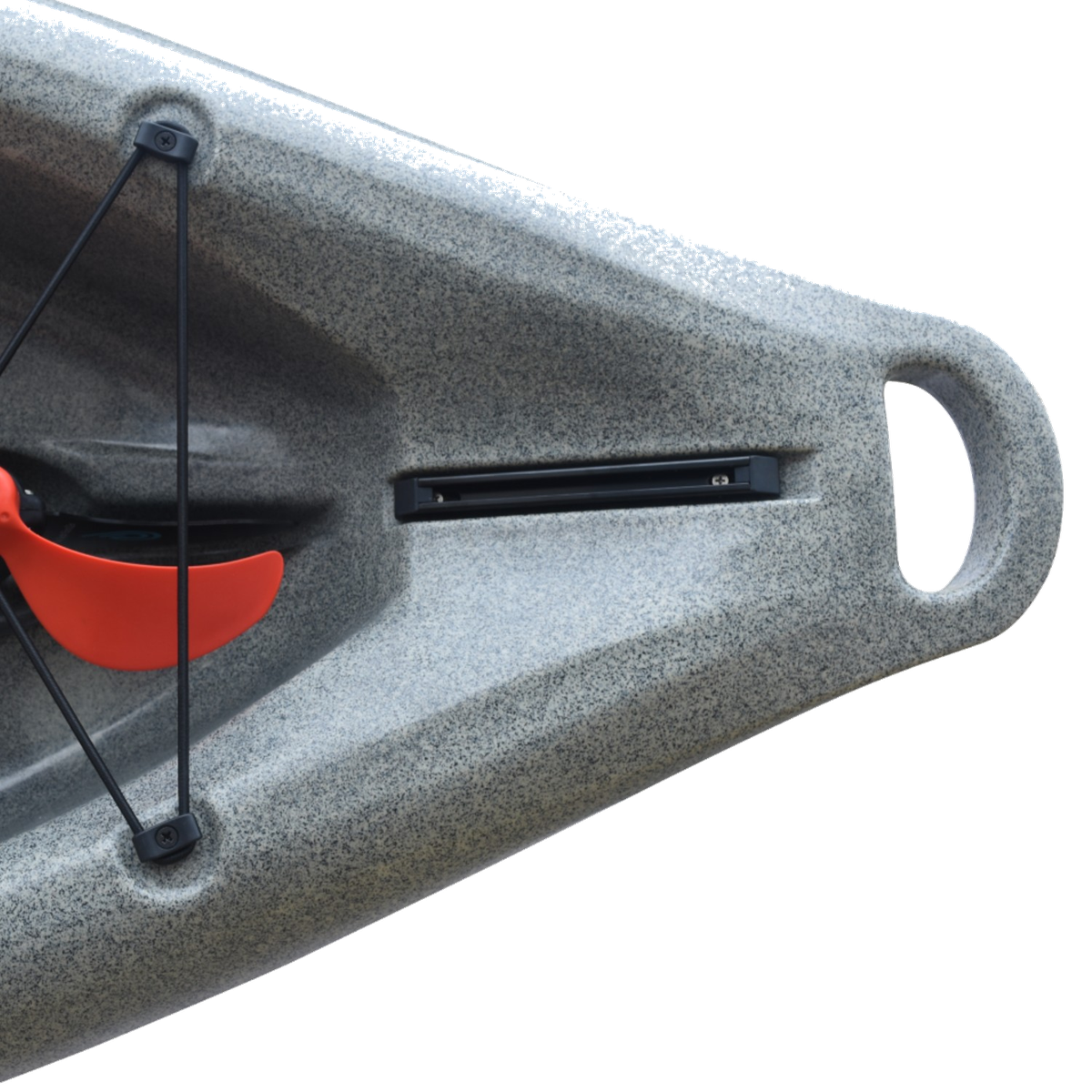
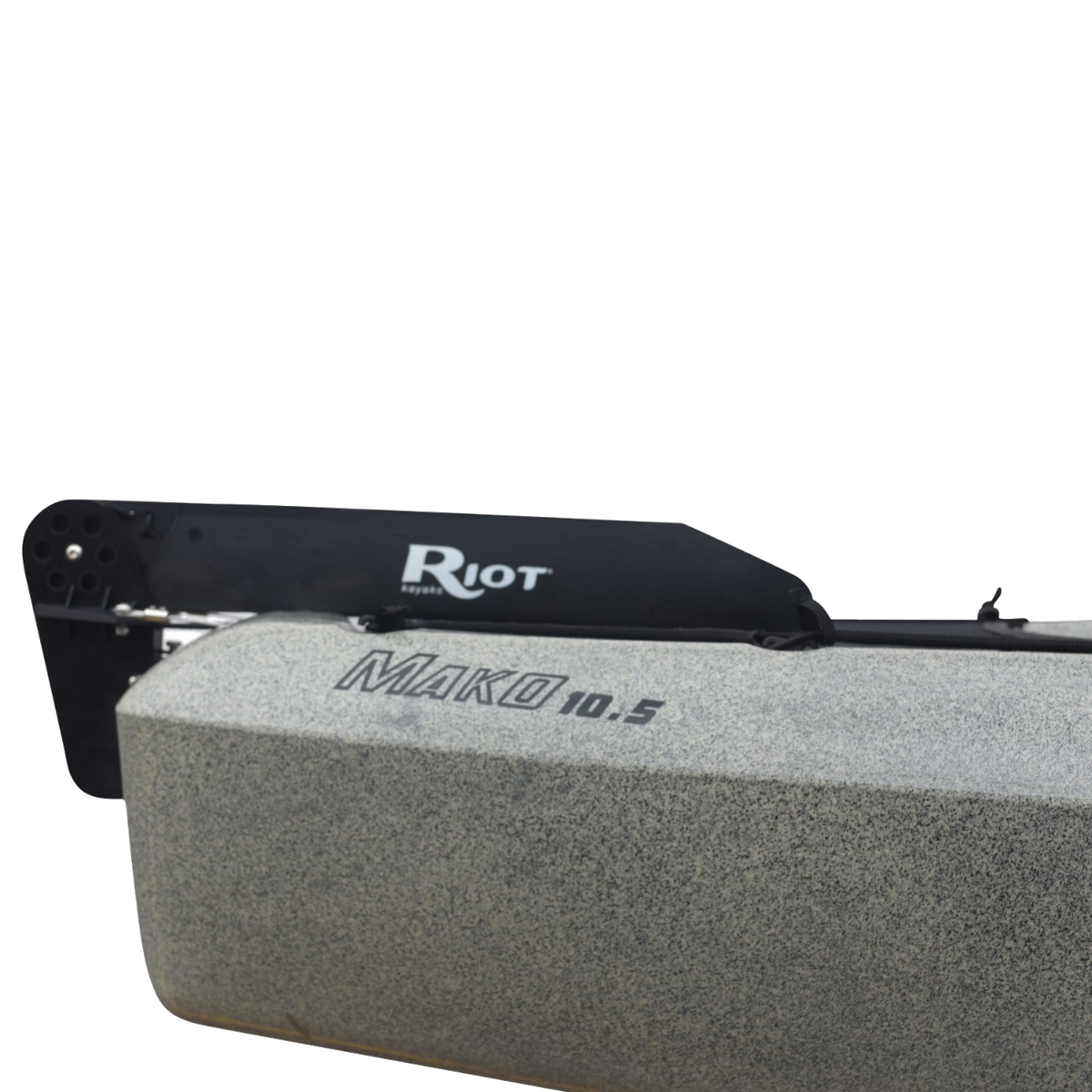
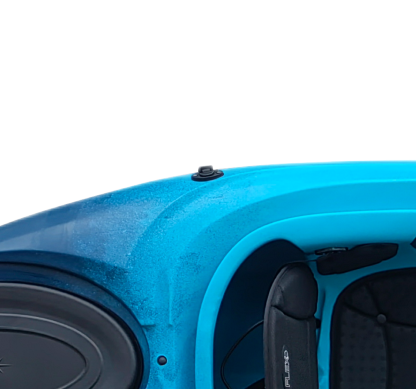
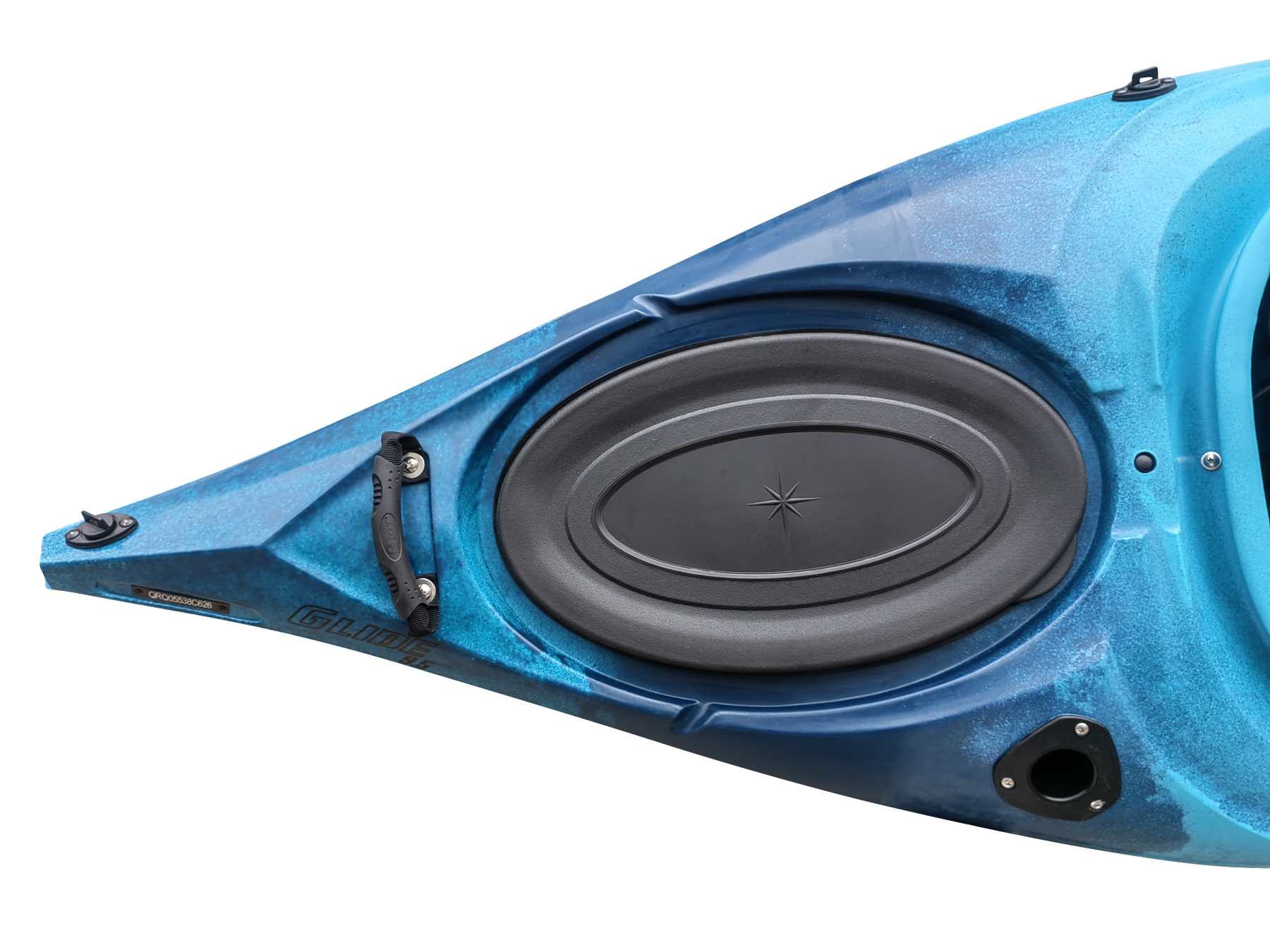
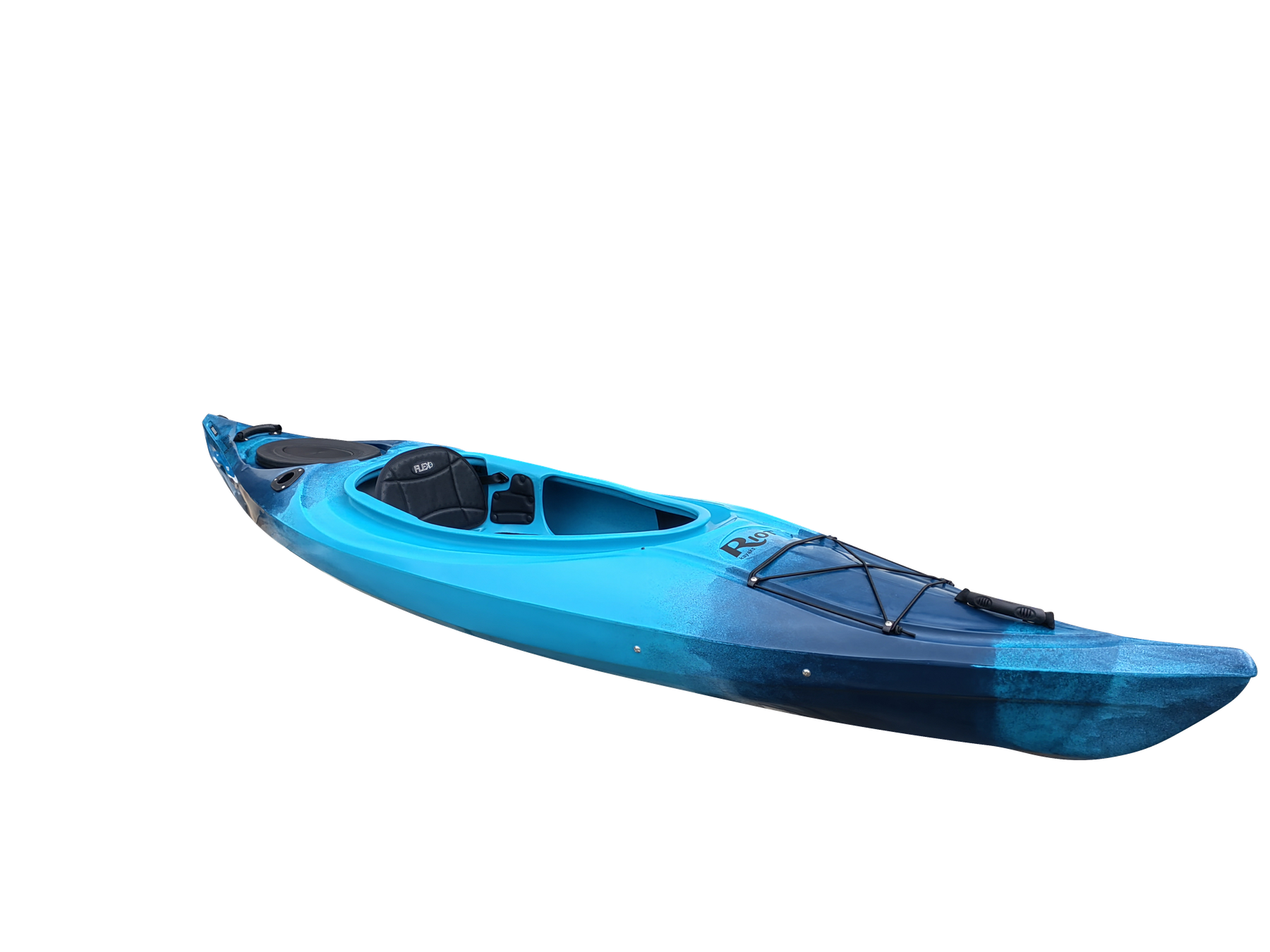
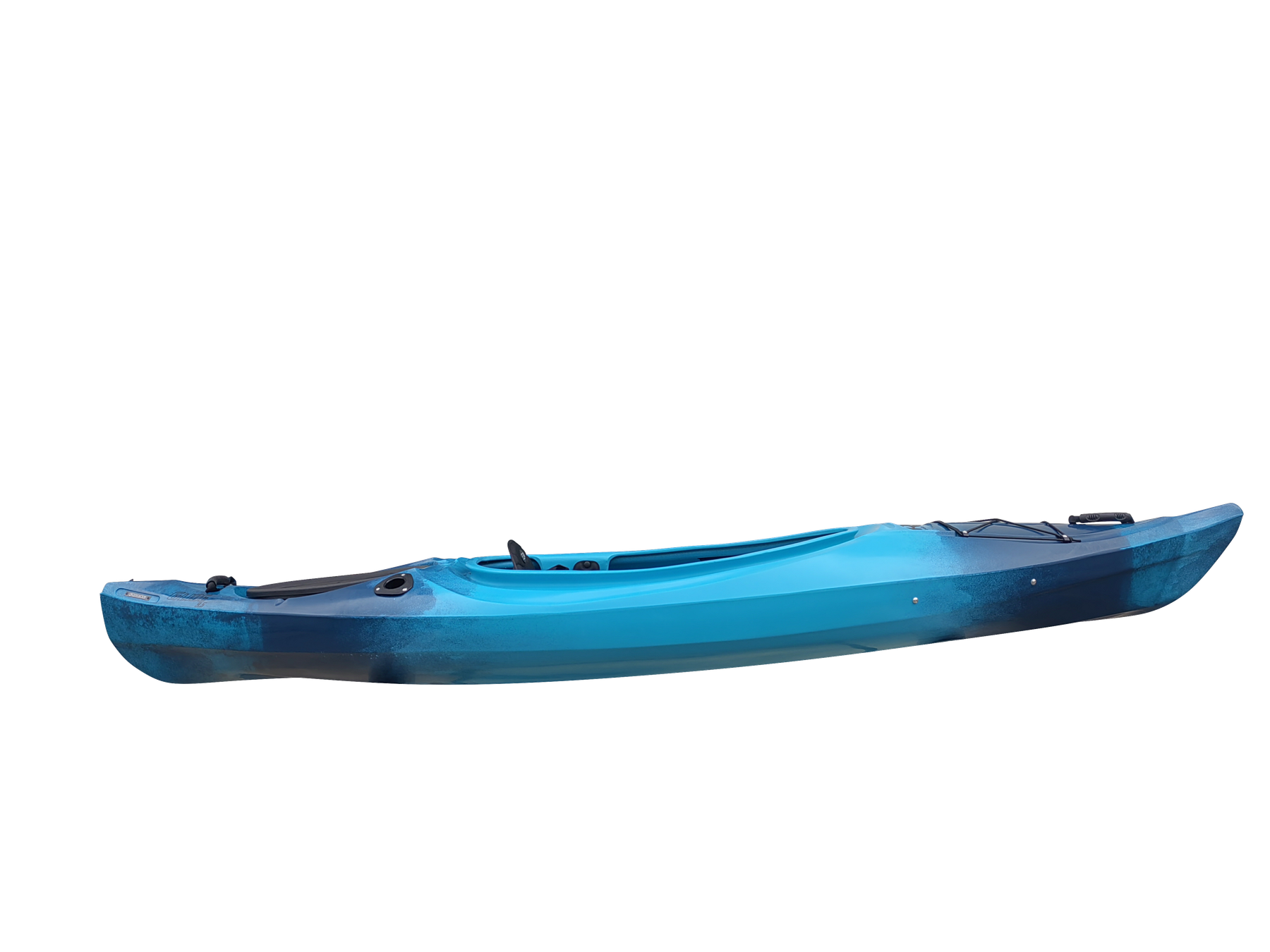
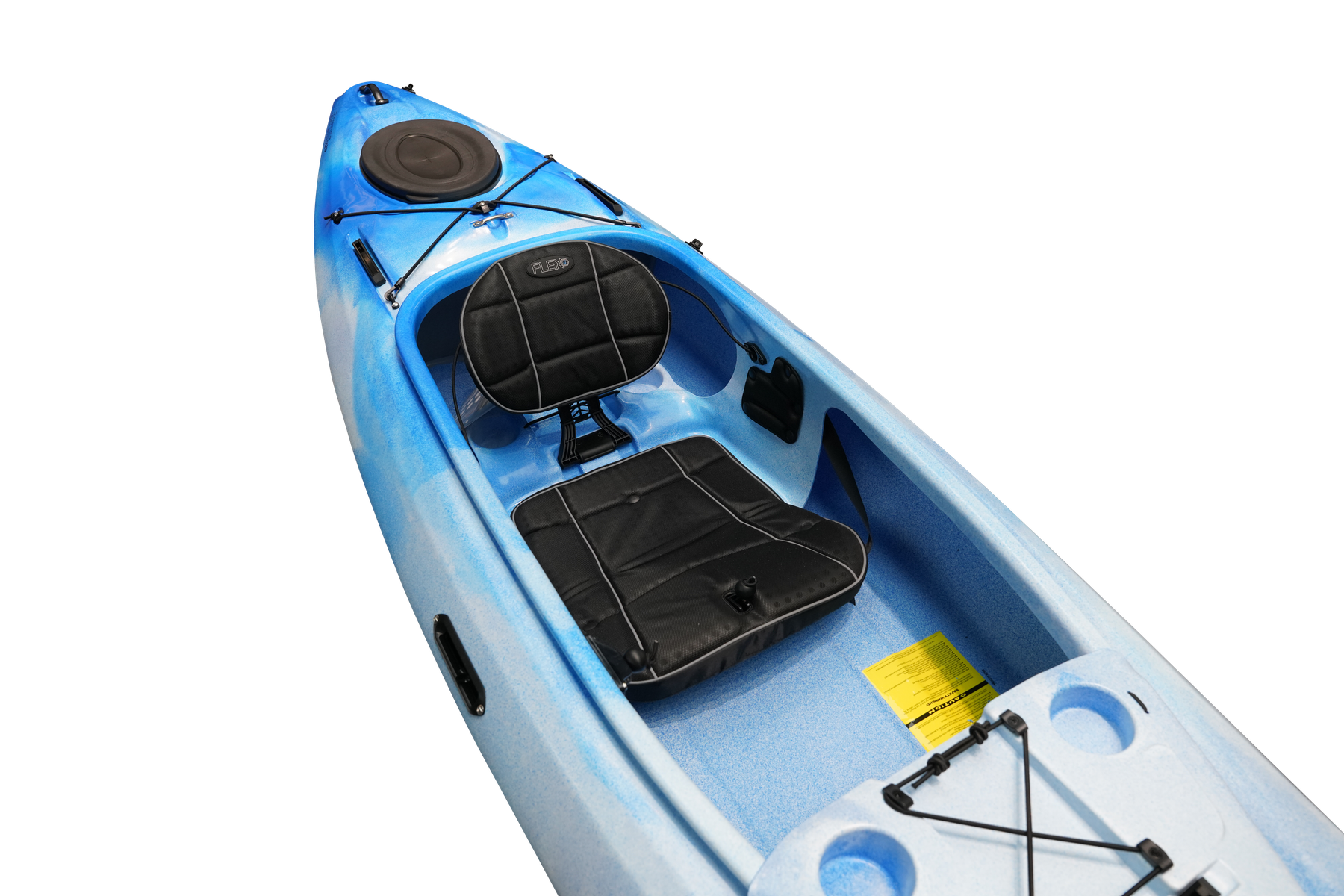
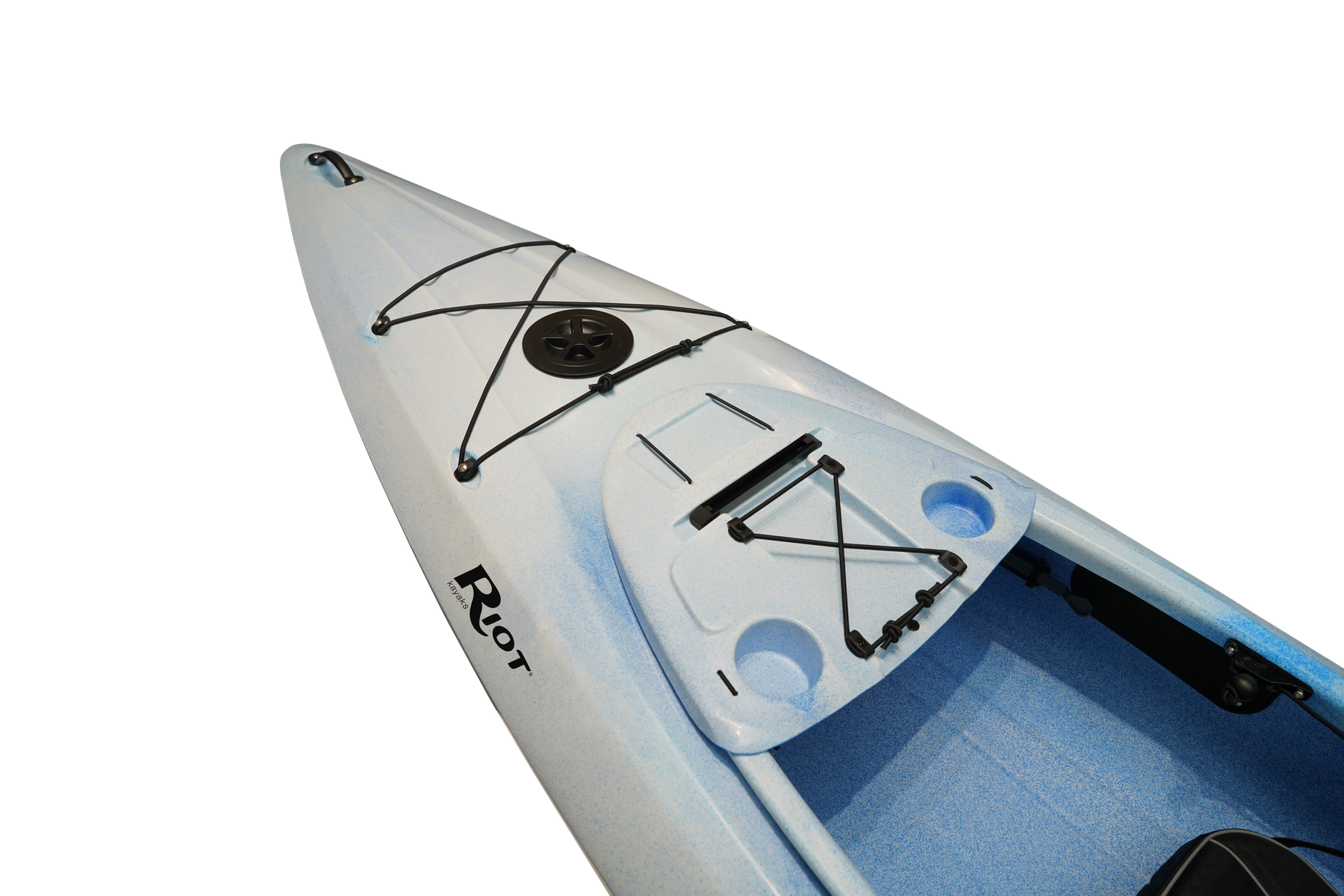
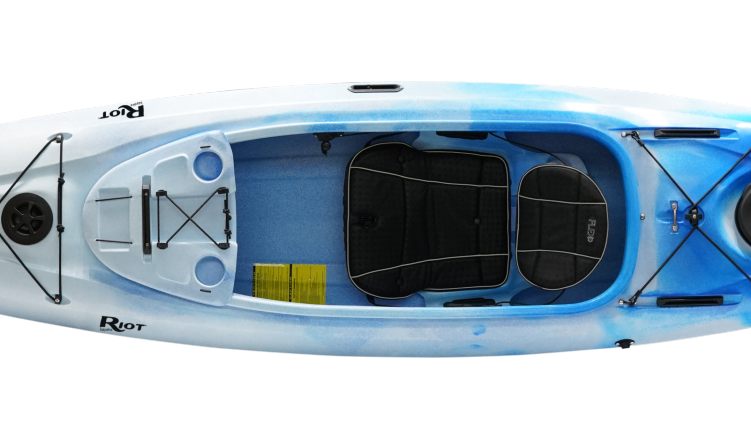
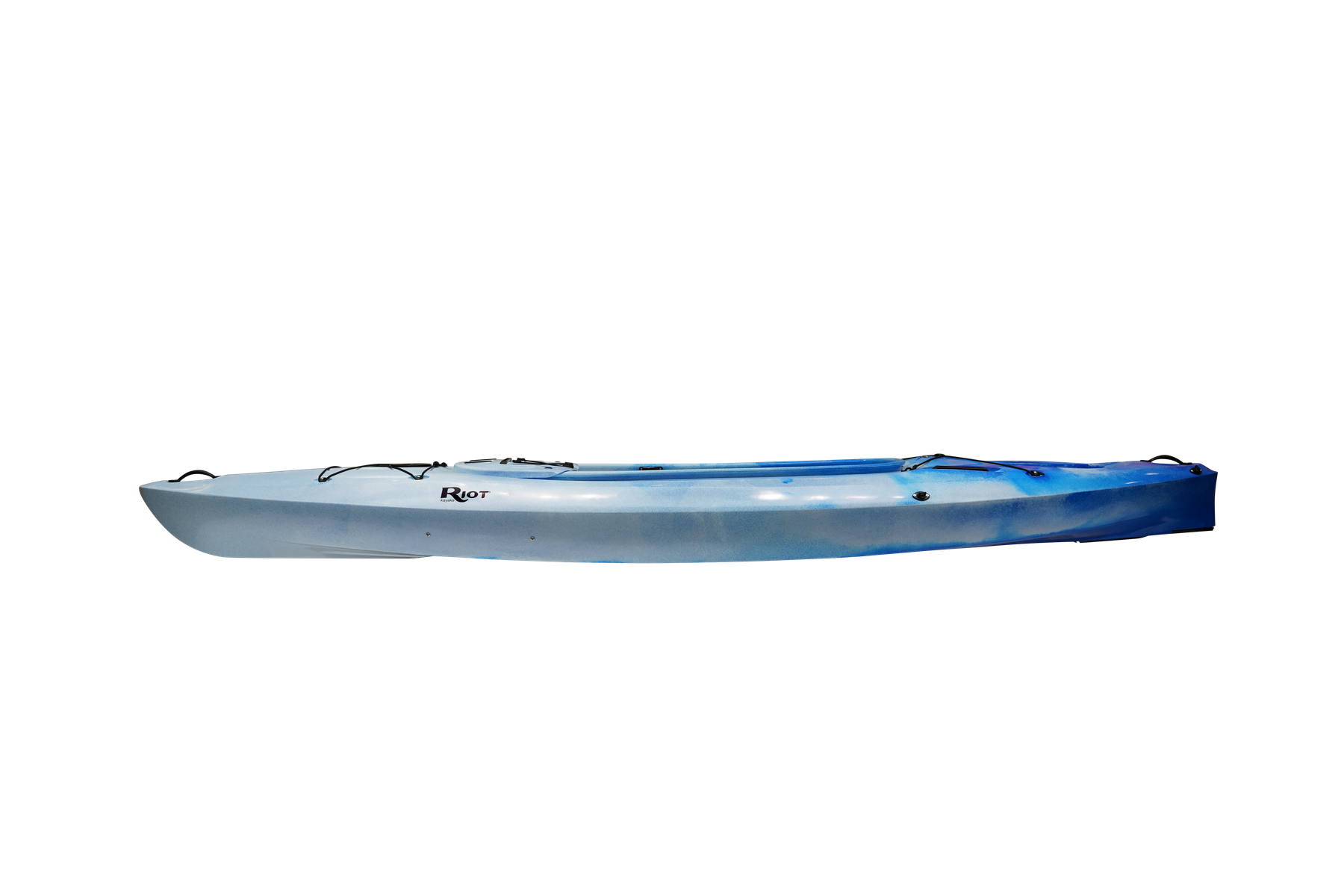
High-Density Polyethylene plastic shaped by spinning a heated mold. Produces a single, seamless, hollow hull. The standard for sit-on-top fishing kayaks. Heavier than alternatives but bulletproof — drag it, drop it, leave it on rocks.
Thermoformed
Two sheets of plastic (typically ABS or acrylic-capped HDPE) heat-formed and bonded together. Lighter and stiffer than rotomolded, with a glossier finish. More expensive, less abuse-tolerant. Common in mid-tier touring kayaks.
Composite (Fiberglass / Kevlar / Carbon)
Layered woven cloth and resin. Lightest and stiffest, also most expensive — and most fragile. Reserved for high-end sea kayaks and racing. Not in this guide's scope.
Sit-On-Top (SOT)
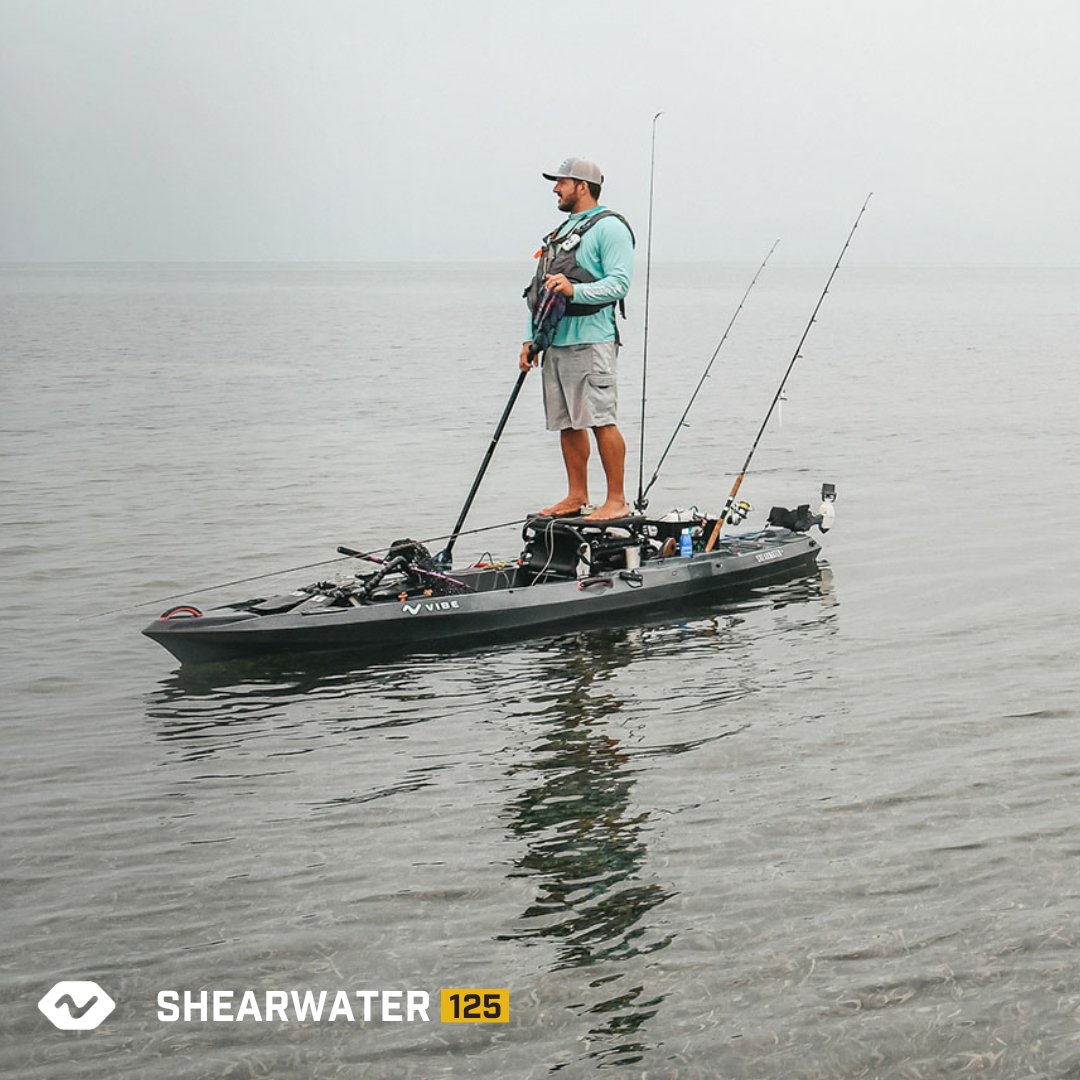
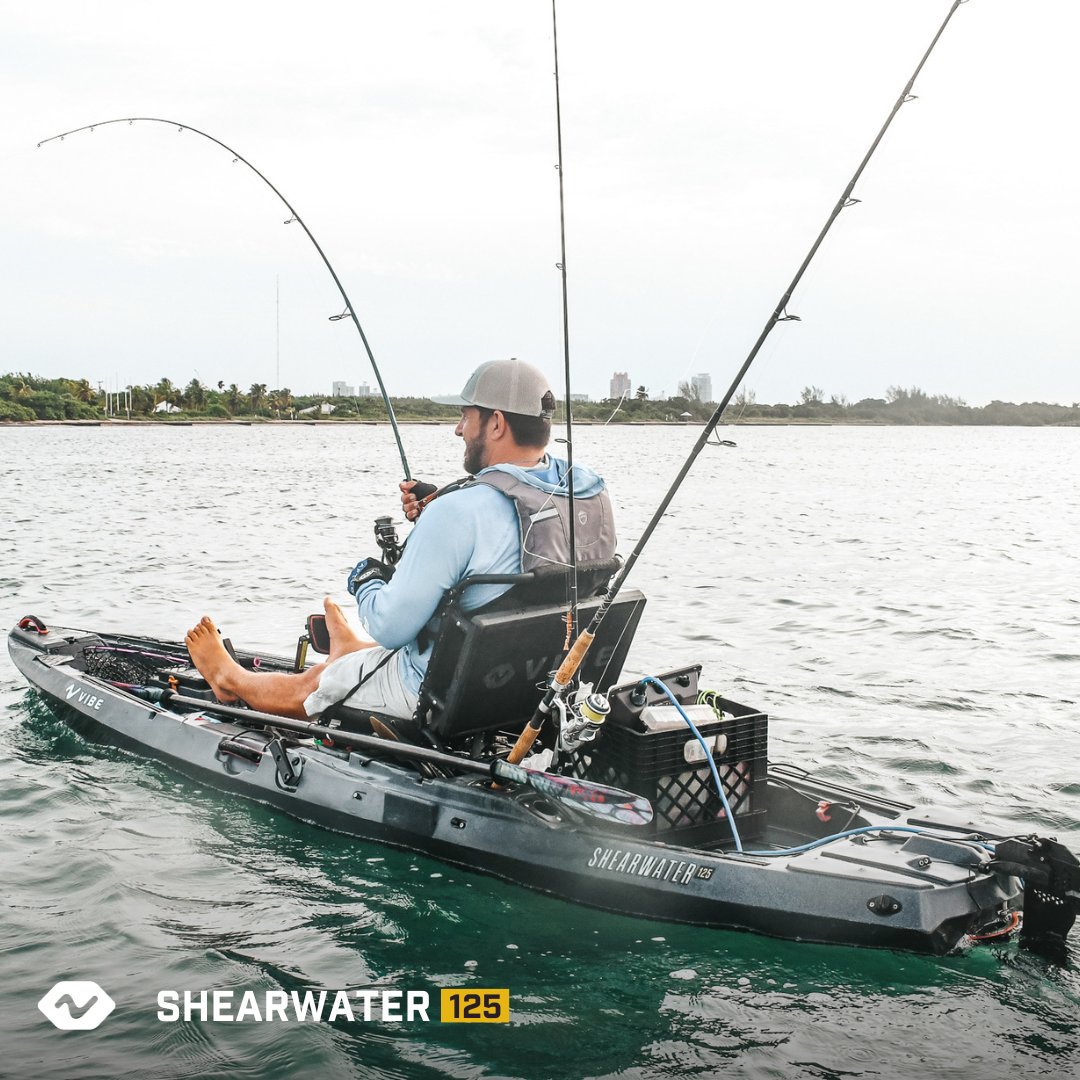
Open-deck kayak — the paddler sits on top of a sealed hull rather than inside an enclosed cockpit. Self-draining via scupper holes. Easier entry/exit, more stable, harder to swamp. The dominant format for fishing kayaks.
Sit-Inside (SIK)
Traditional cockpit-style kayak. Drier, warmer, more efficient — but harder to remount if the paddler swims. Better for touring and cold water than for fishing or rec.
Scupper Holes
Drain holes molded through the deck of a sit-on-top. Water that lands on deck (waves, rain, paddle drip) drains out the bottom. The boat can't fill up. Some scuppers also accept transducer mounts.
Primary Stability
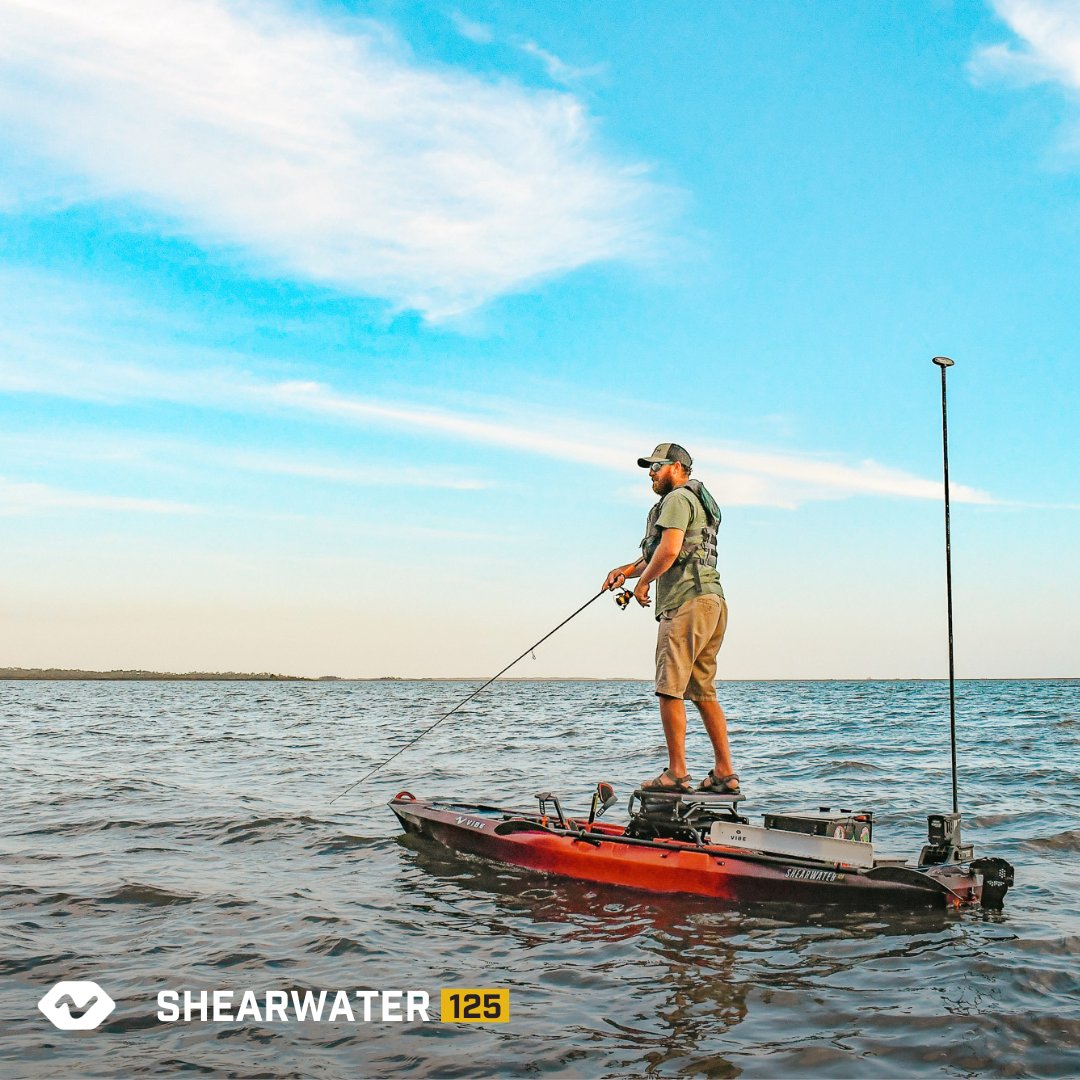
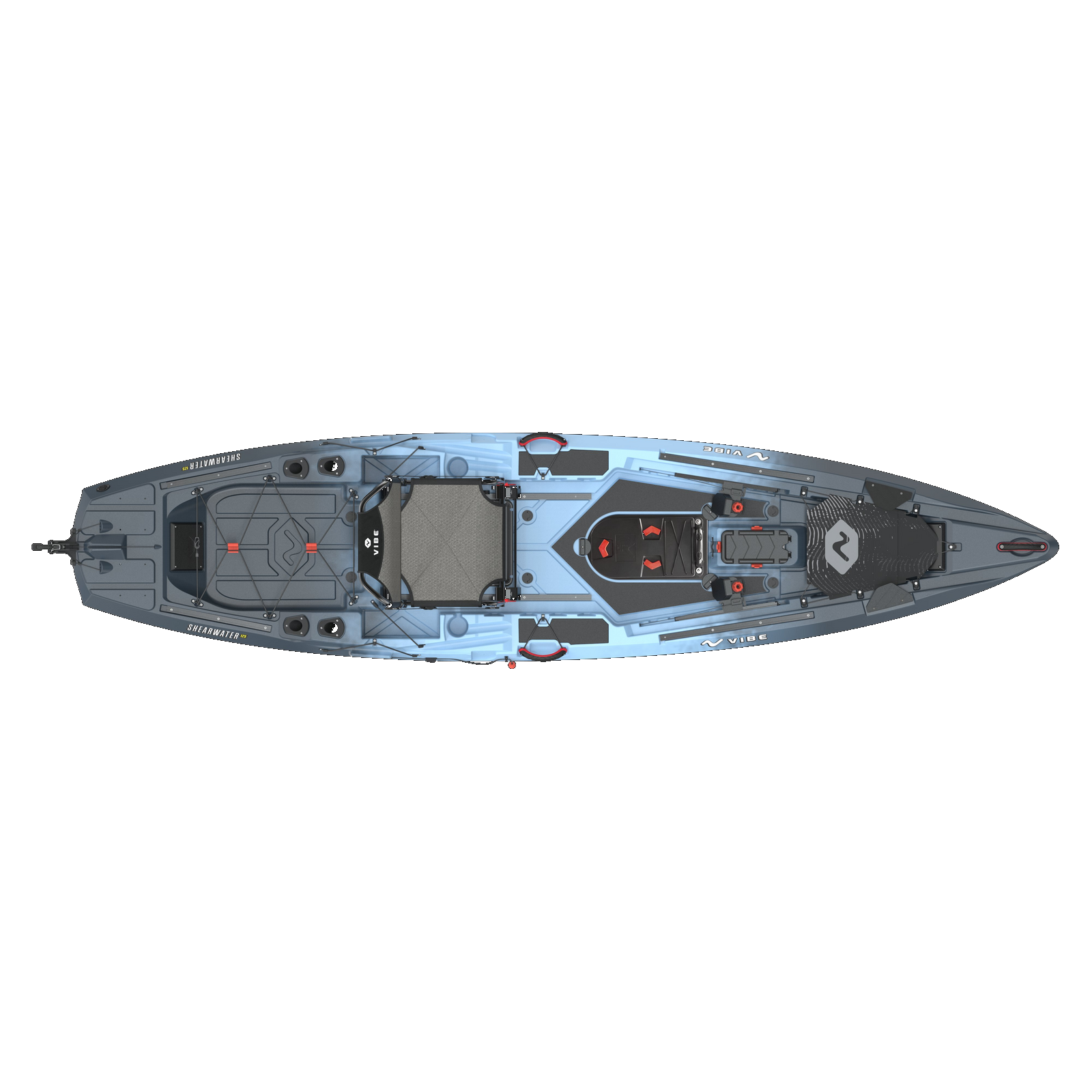
How stable the kayak feels when sitting flat in calm water. High primary = "doesn't tip easily when I sit down" — what most beginners are asking about. The Shearwater 125 has high primary stability.
Secondary Stability
How stable the kayak feels once it's tilted on edge — the "hold" before it flips. Touring and whitewater kayaks trade primary for secondary; rec kayaks favor primary.
Tracking
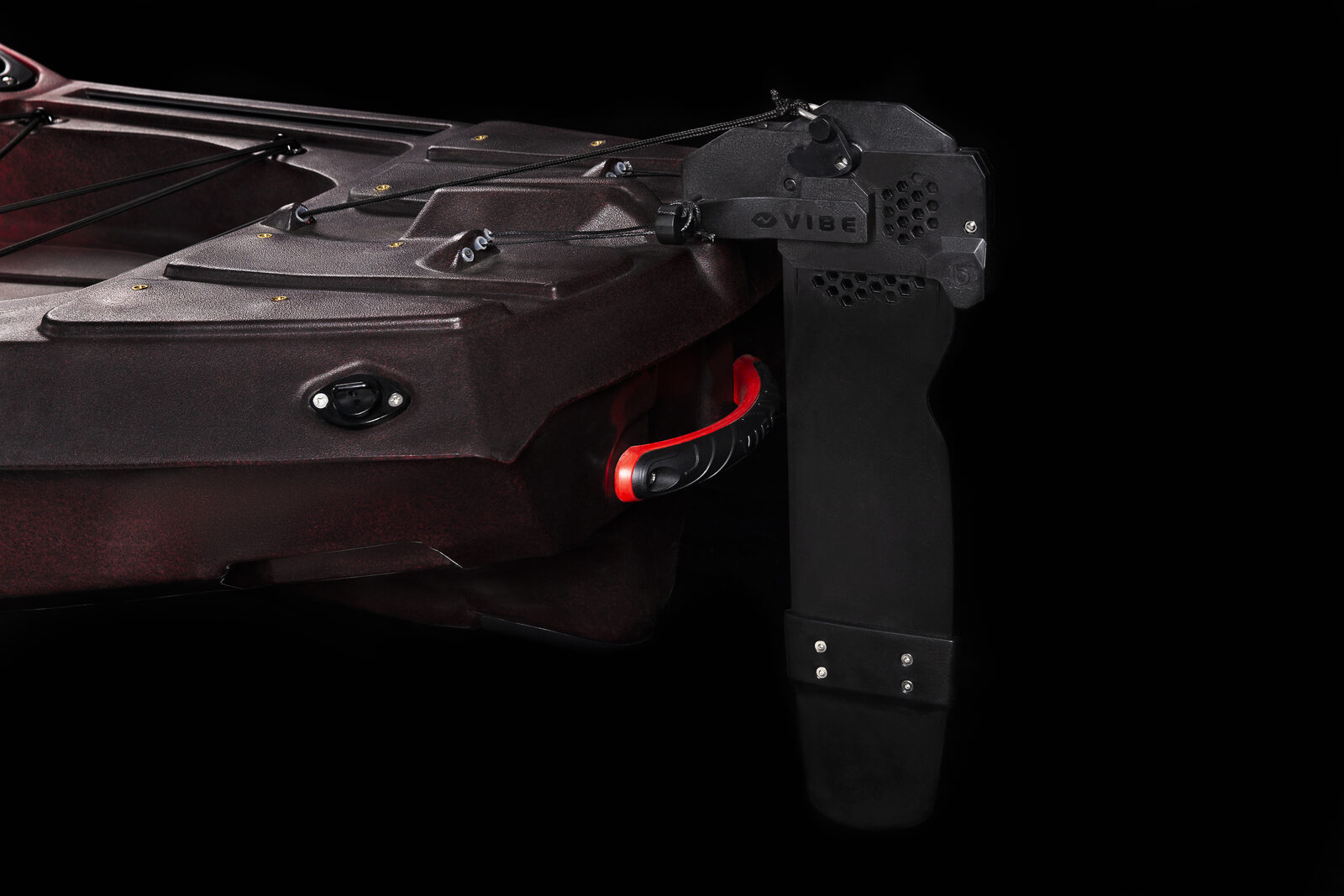
How well a kayak holds a straight line. Long, narrow hulls track better. Short, wide hulls turn easier but wander. A rudder dramatically improves tracking on any hull.
Freeboard
The height of the hull above the waterline. More freeboard = drier ride, more wind catch. Less freeboard = wetter, but more wind-efficient. Fishing kayaks tend toward high freeboard for stability.
Skid Plate
A sacrificial plastic strip along the keel where the hull contacts ground. On the Shearwater 125 it's user-replaceable — wears down over years, gets bolted off and replaced. Saves the hull underneath.
Gear Track
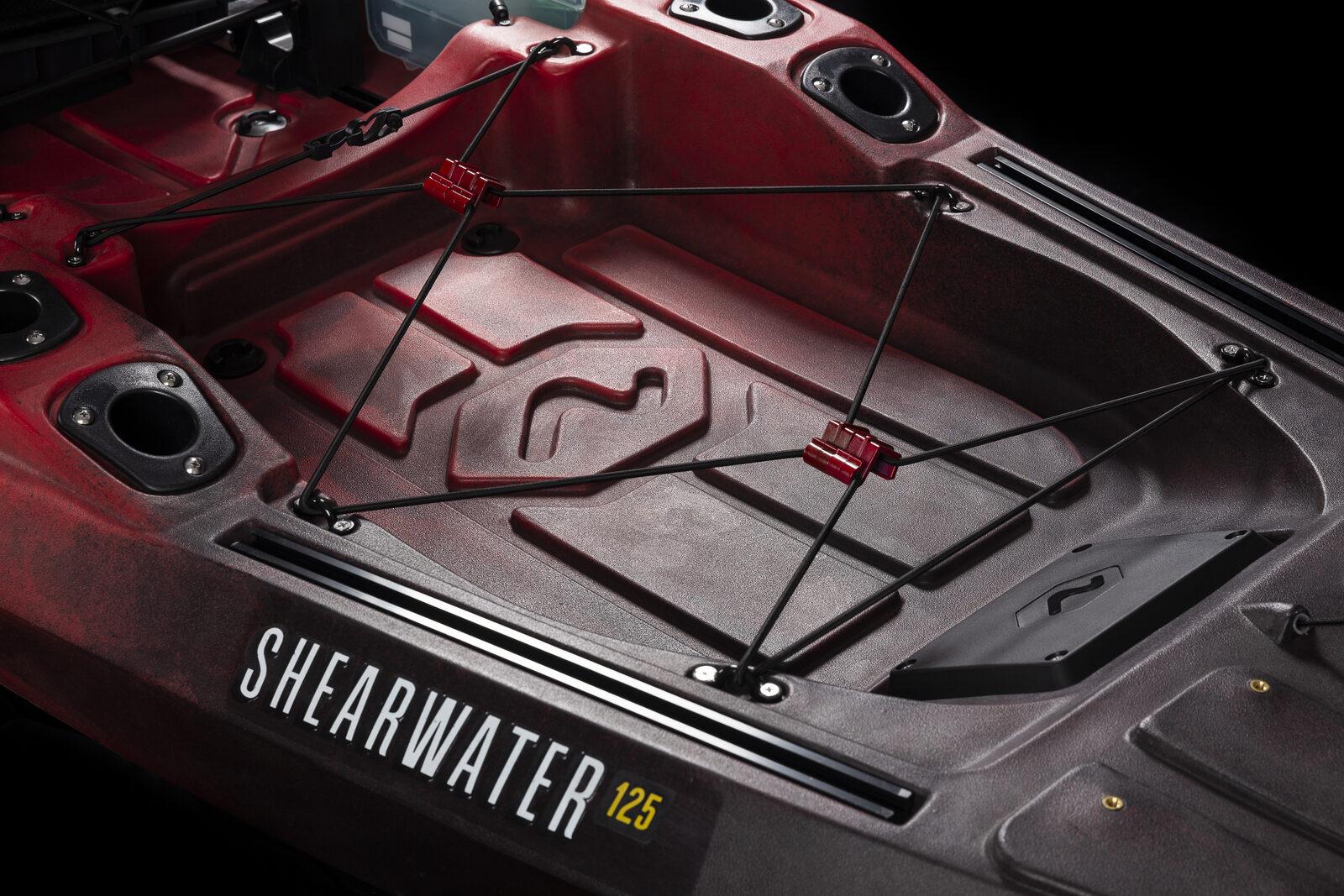
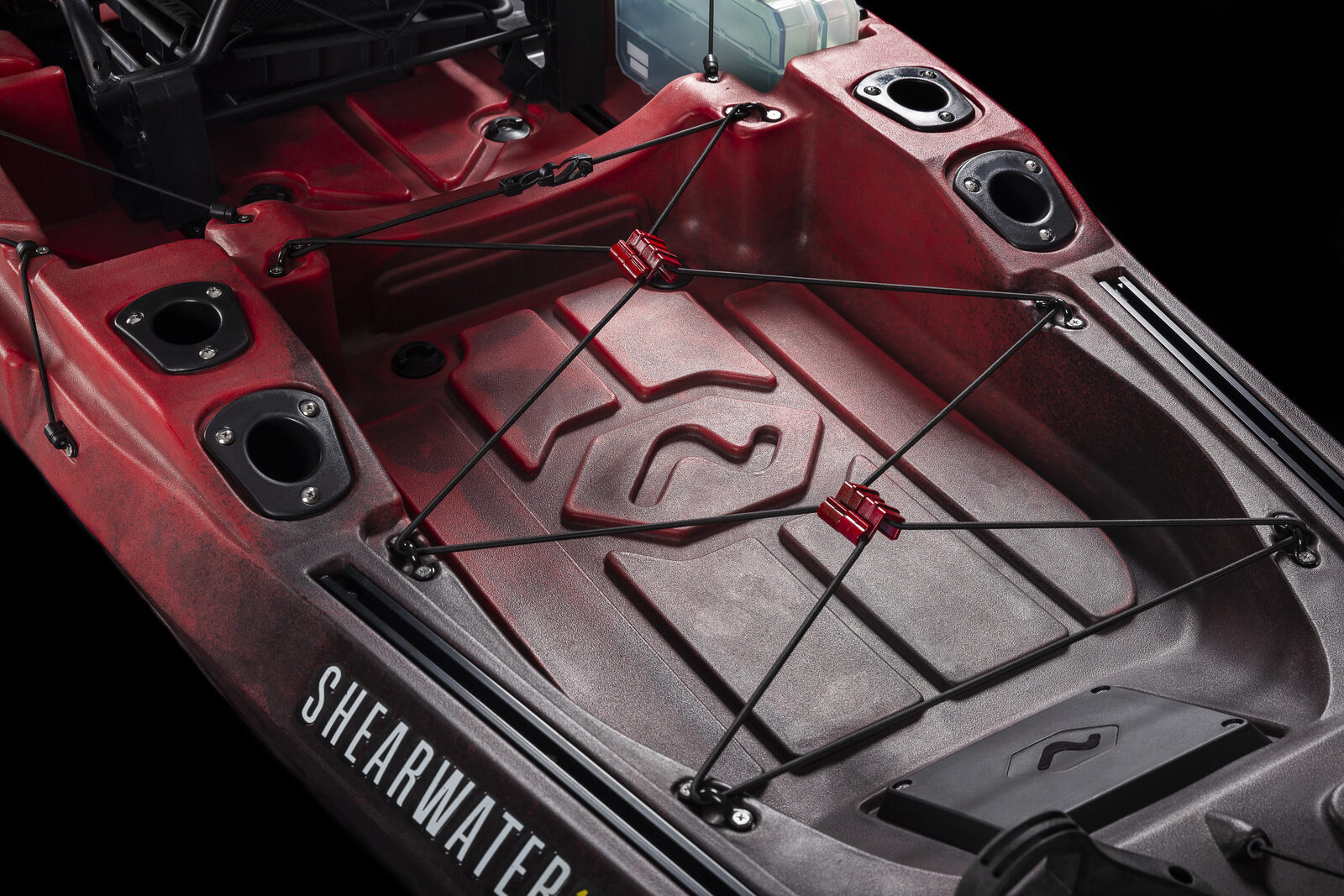
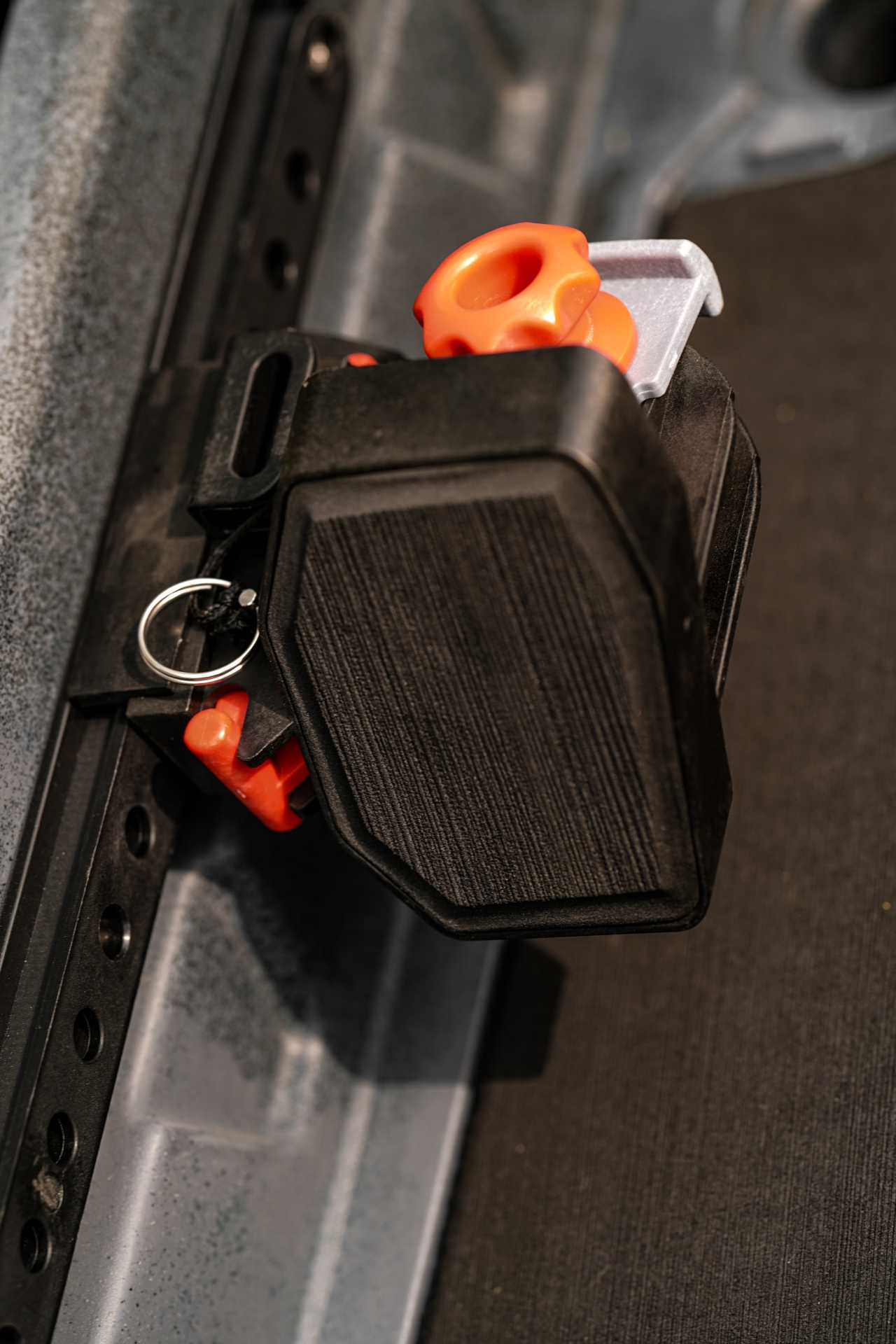
A standardized aluminum (or HDPE) rail molded into the deck for mounting accessories — fish finders, rod holders, GoPros, lights. The Shearwater 125 has four; standard track-mount accessories from any brand fit.
Flush Mount Rod Holder
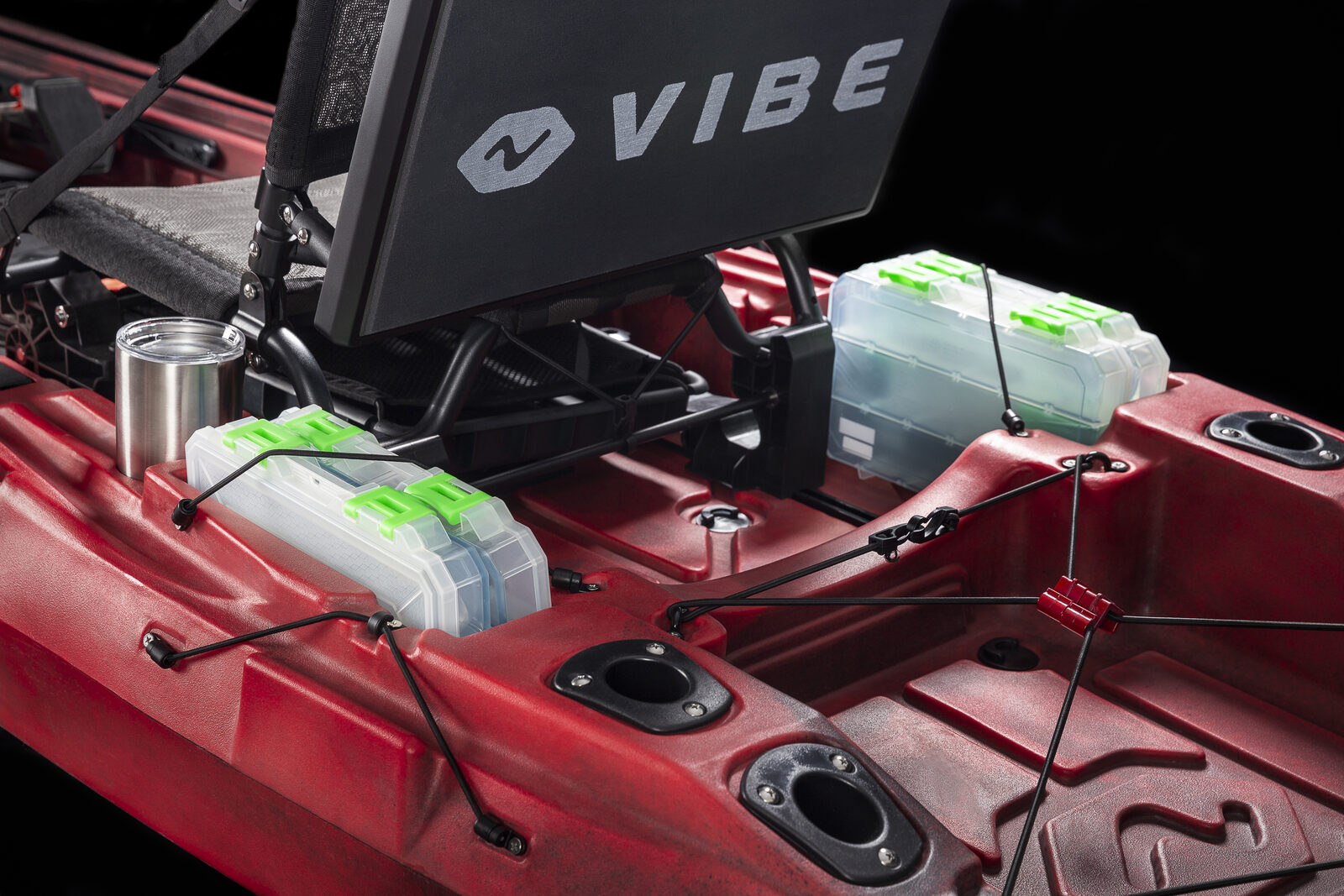
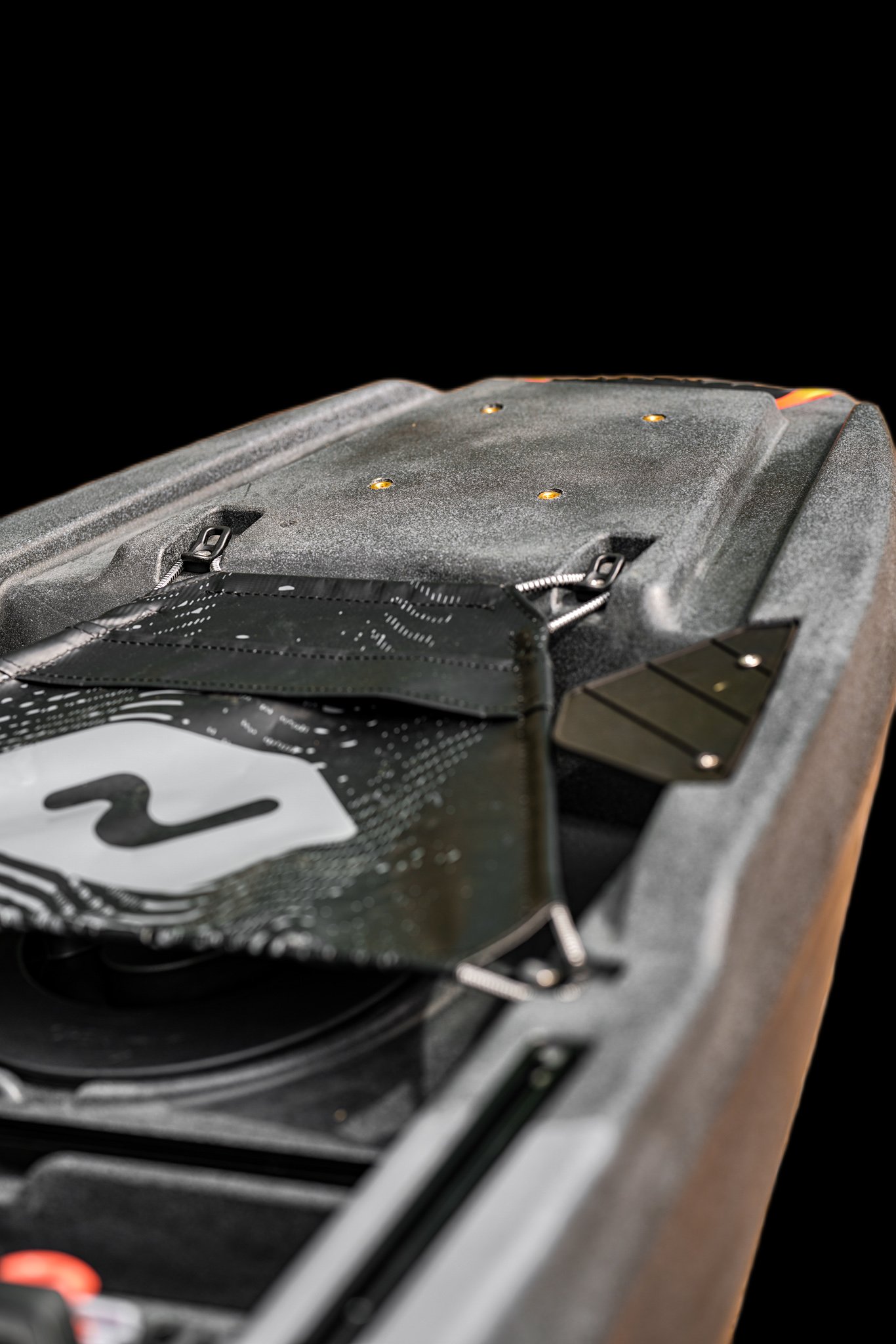
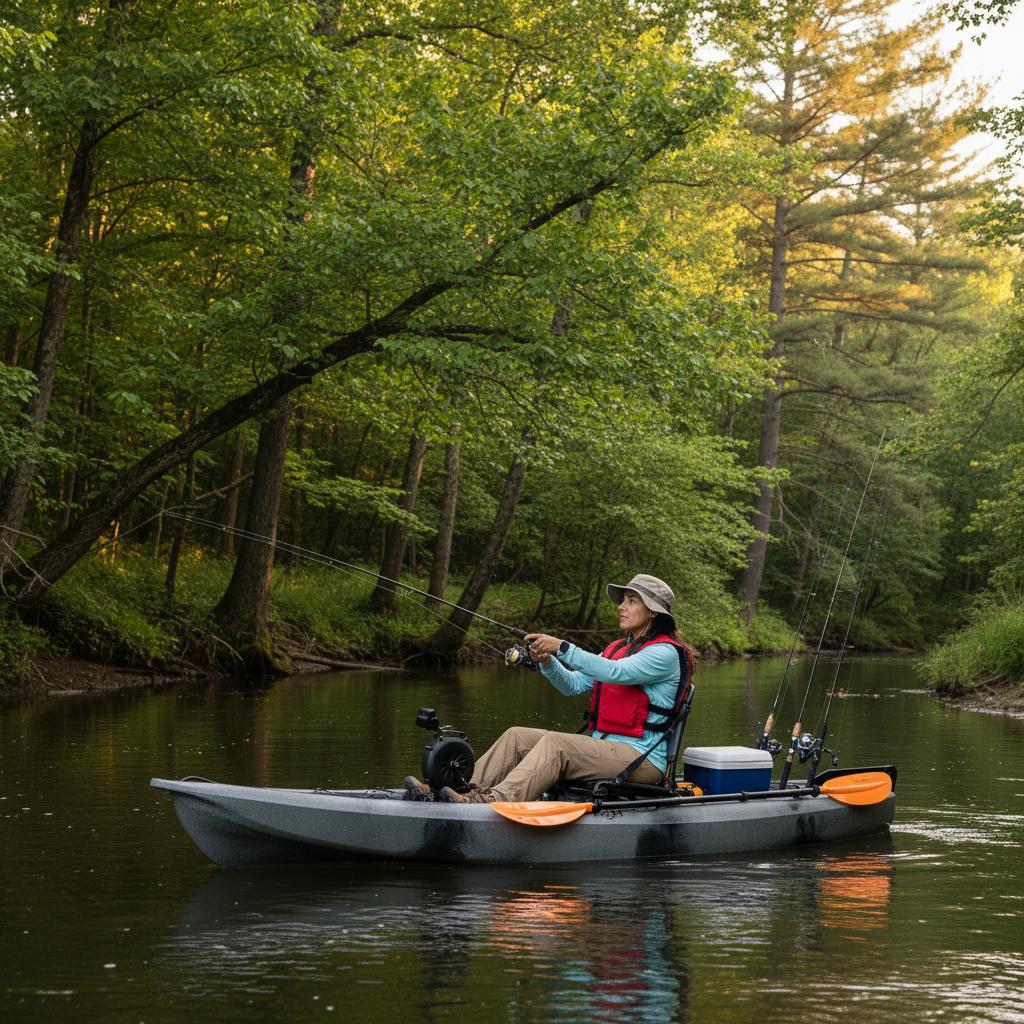
A rod holder built into the deck (rather than clamped on a track). Holds rods at a fixed angle. Faster to deploy, can't be repositioned. The Shearwater 125 has four, all behind the seat.
Bixpy
A brand of small electric jet motors designed for kayaks. Clip-on, battery-powered, 1.5–3 hp equivalent. The Shearwater 125's rudder system is Bixpy-ready out of the box.
Pedal Drive
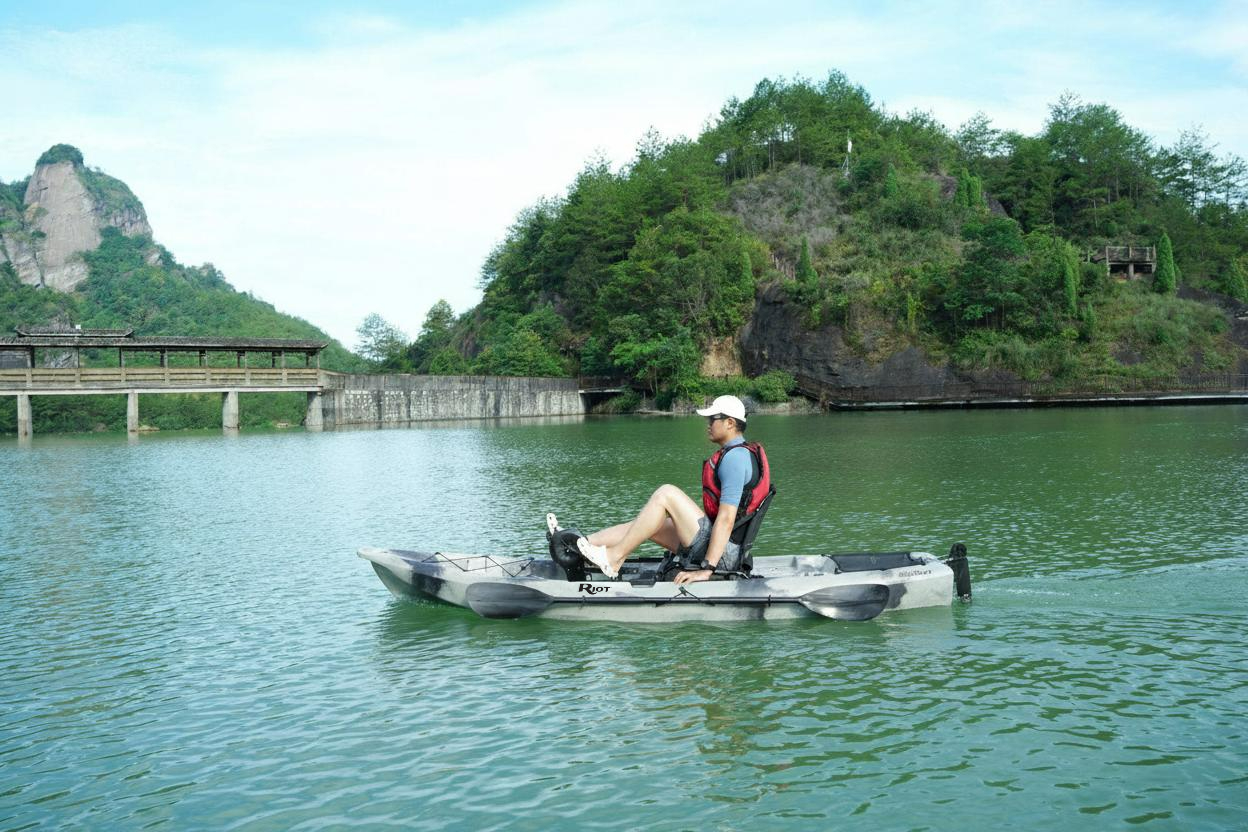
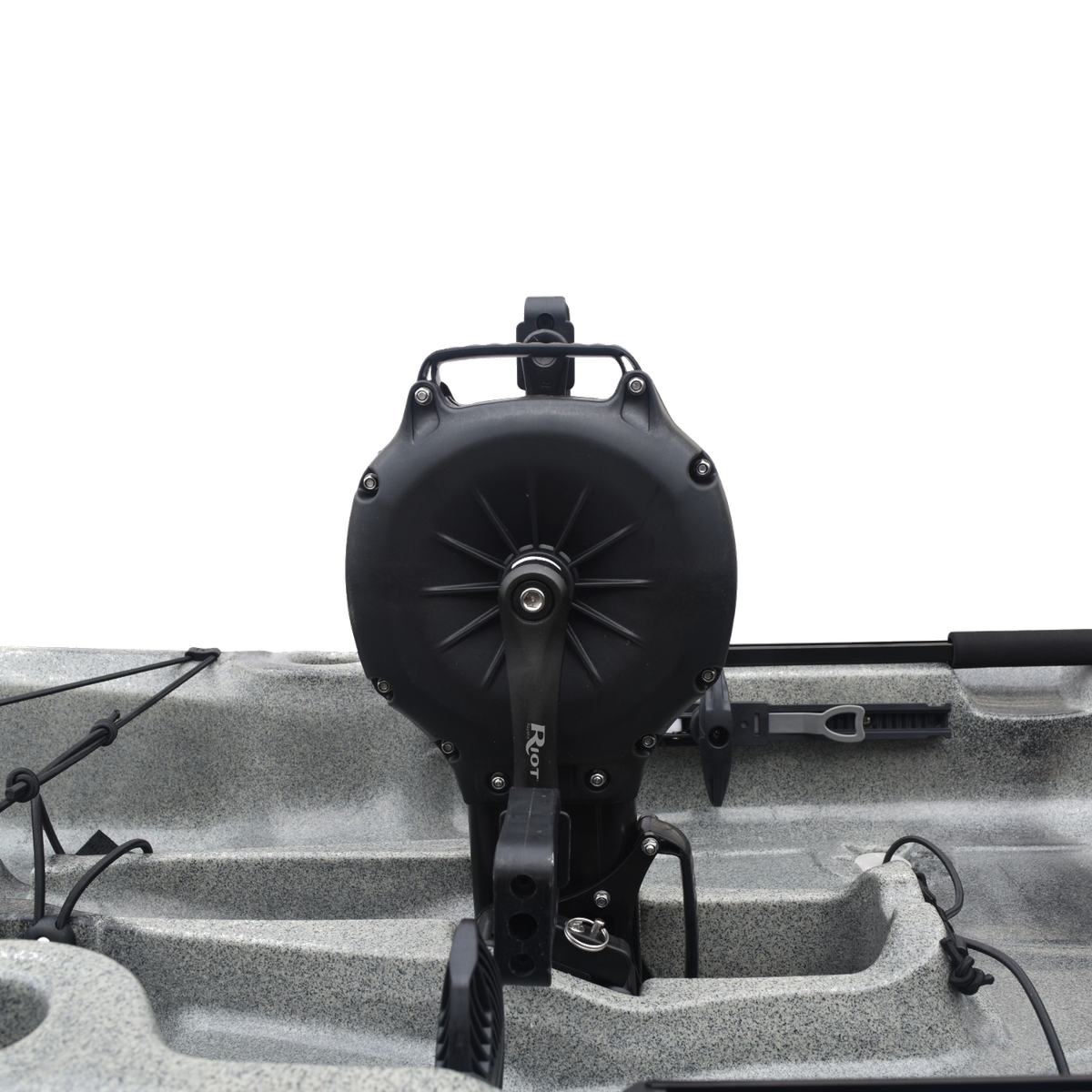
A leg-powered propulsion system that frees the paddler's hands for fishing. Two main types: fin (X-Drive — handles weeds) and propeller (Impulse Drive — faster, handles open water).
Versa Pod
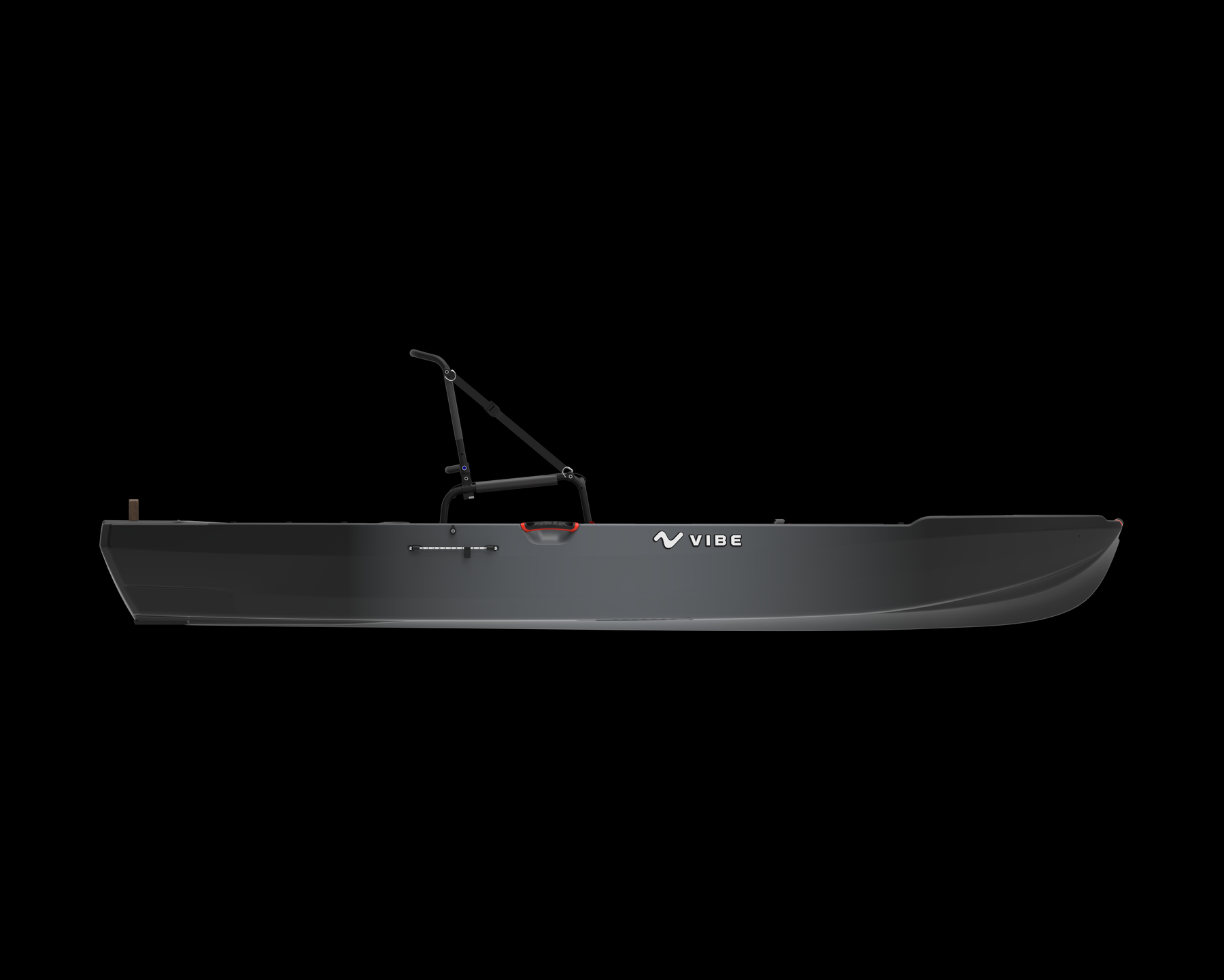
Vibe's interchangeable hull section system. The same kayak can run a paddle pod, an X-Drive pod, or an Impulse Drive pod. Available only on the Shearwater 125 and Makana 100.
Transom
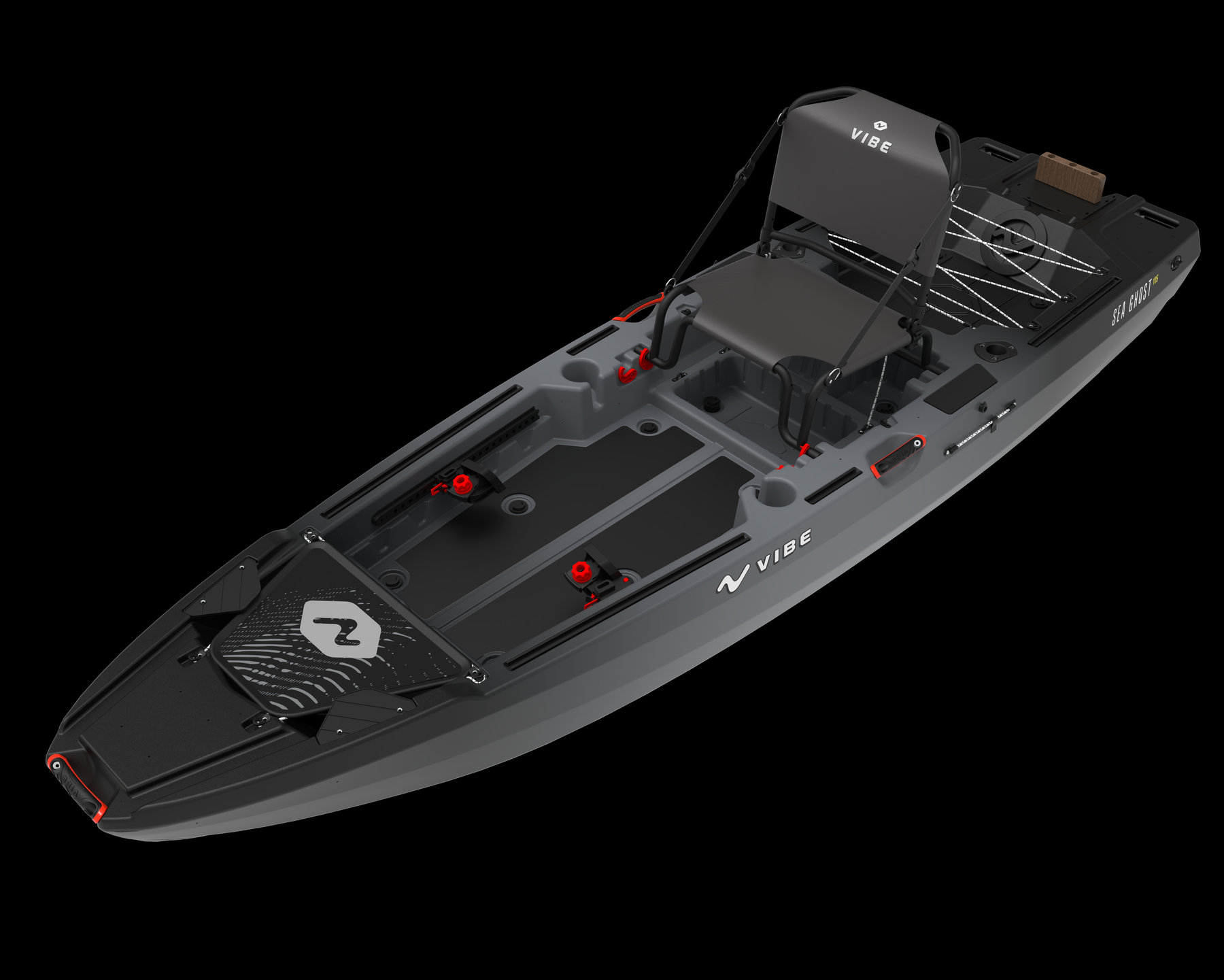
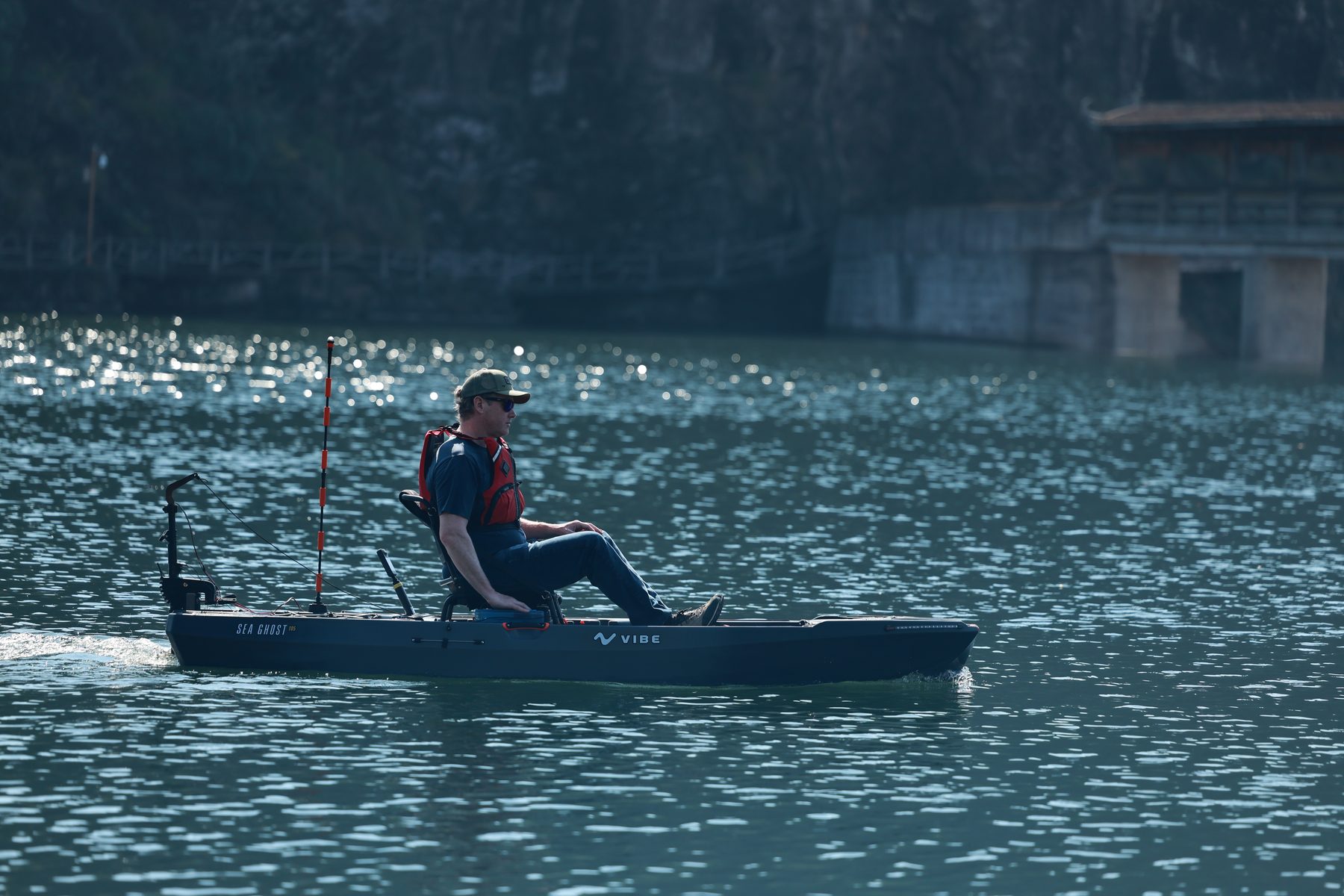
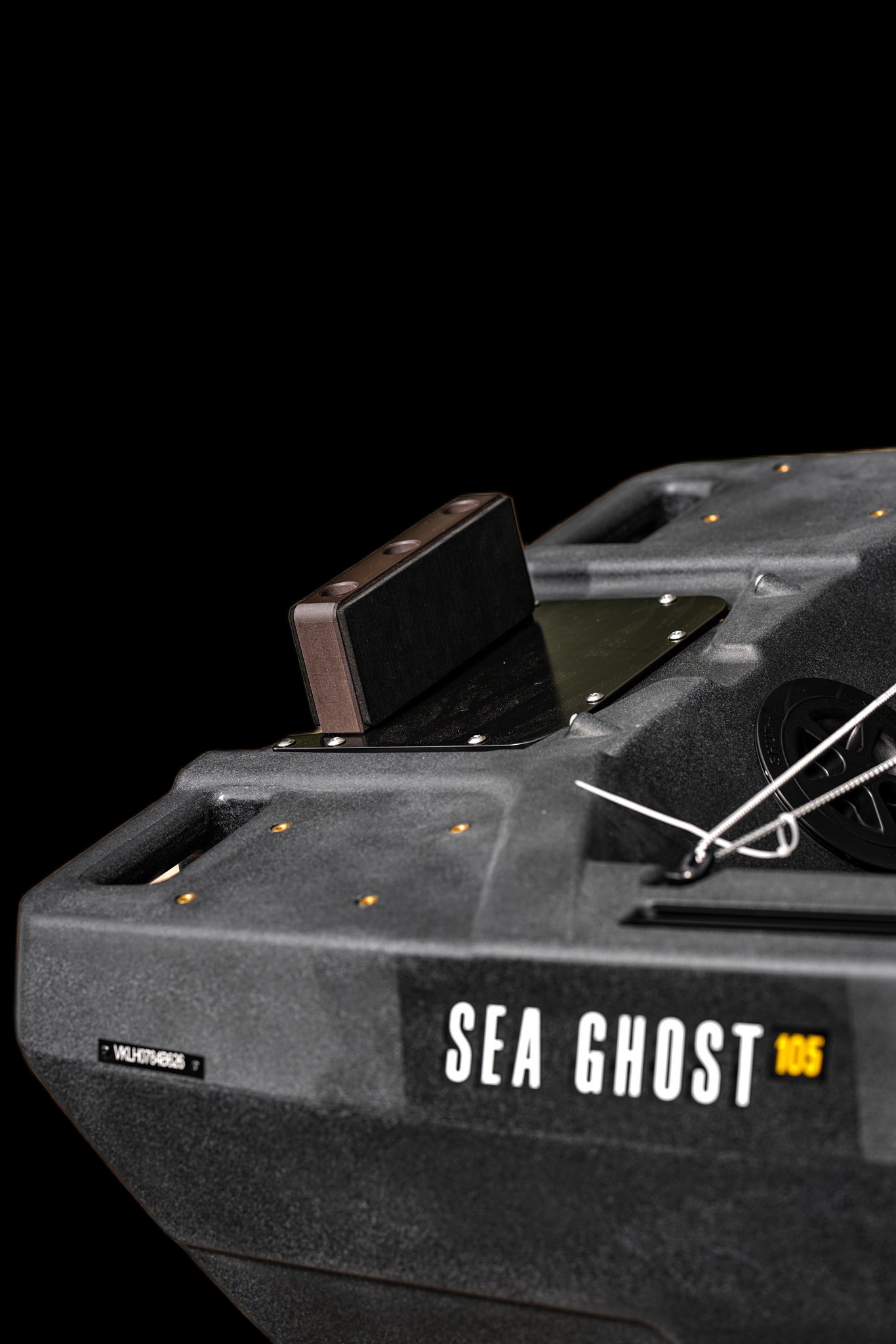
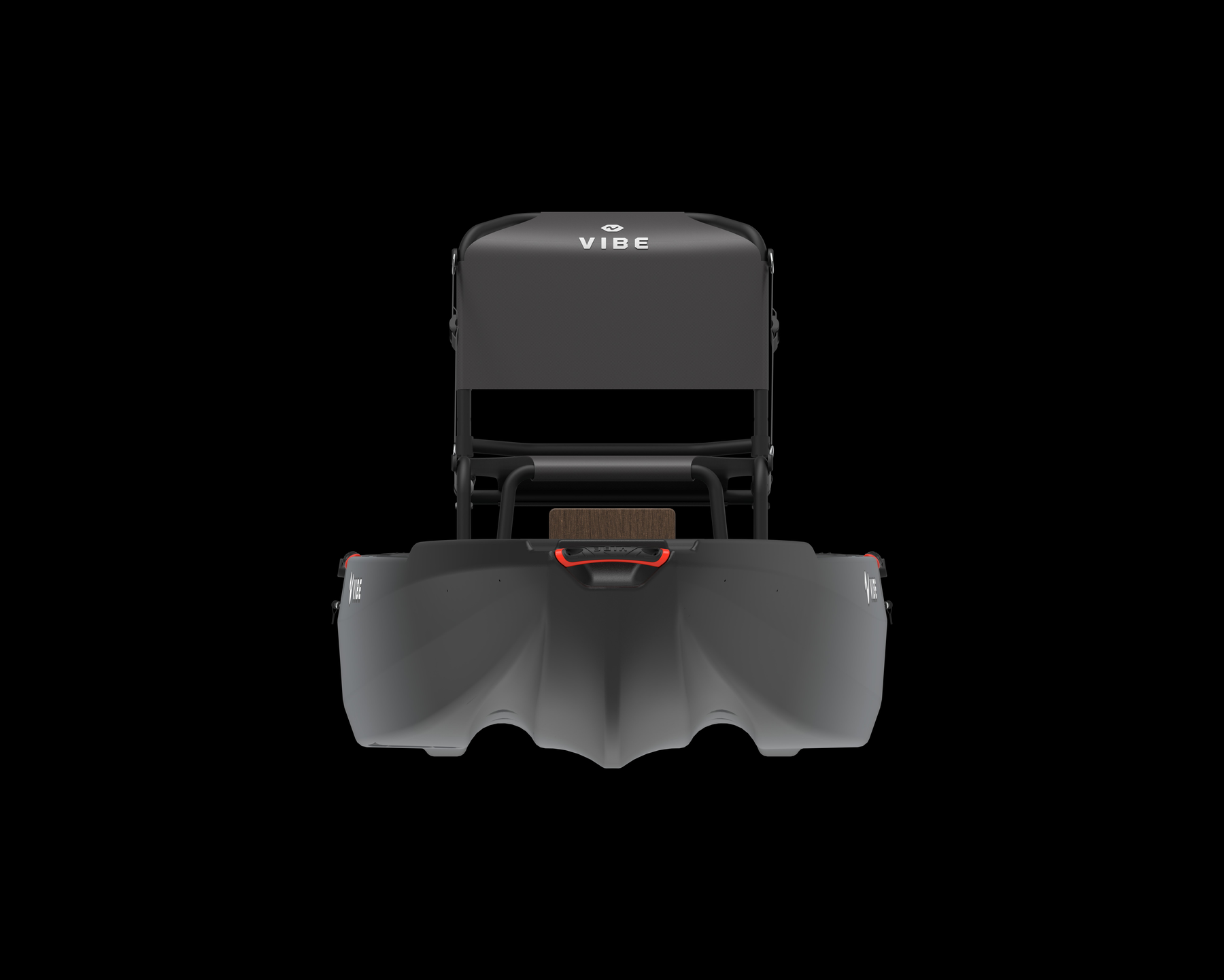
The flat back end of a boat where a stern-mounted motor attaches. Most kayaks don't have one — they're rounded at the stern. The Sea Ghost 105 has a real transom, which is what lets it accept transom-mount trolling motors and small electric outboards without an aftermarket bracket.
True W Hull
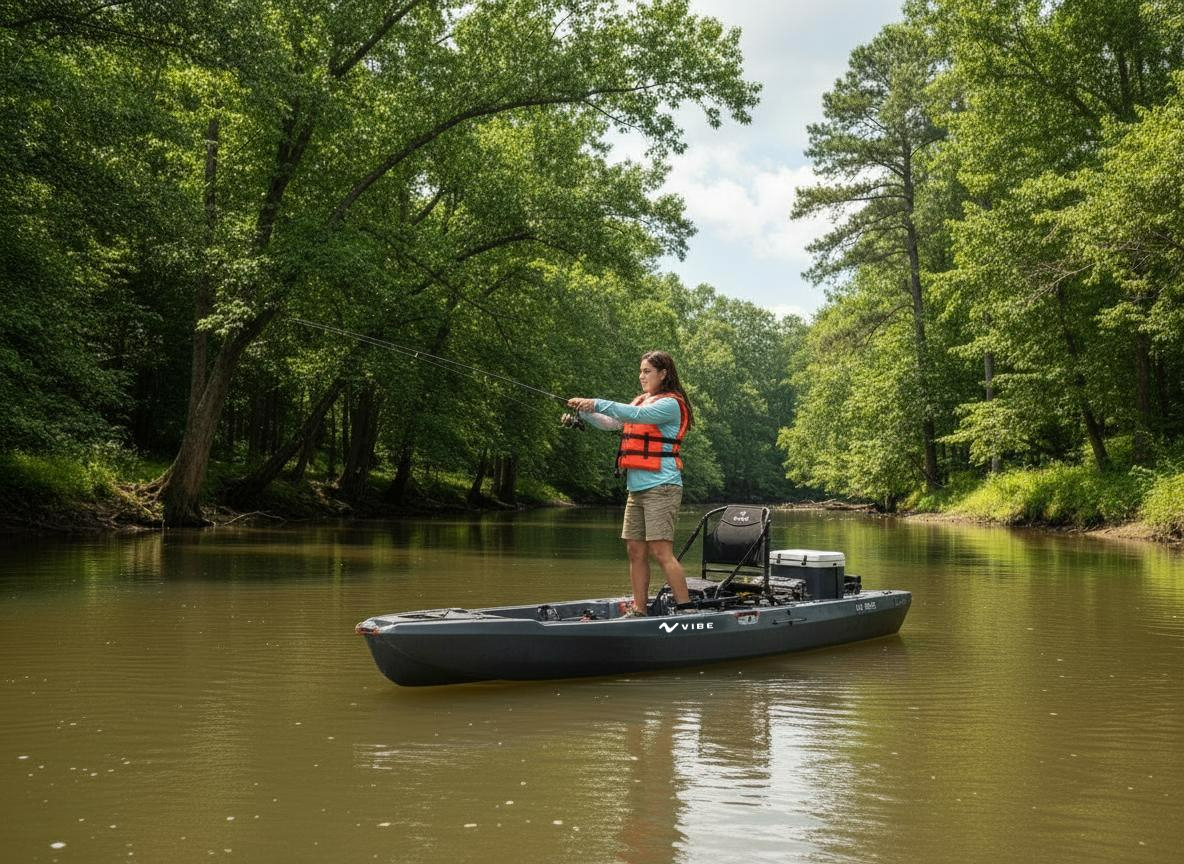
A hull design with two parallel keels along the bottom and a flat tunnel between them — like a miniature pontoon boat. Trades straight-line speed for side-to-side stability. The Sea Ghost 105 hull. Best for stand-up fishing, heavy gear, and motor mounting; not the right choice for paddlers who want to cover distance fast.
Hero 3.0 Seat
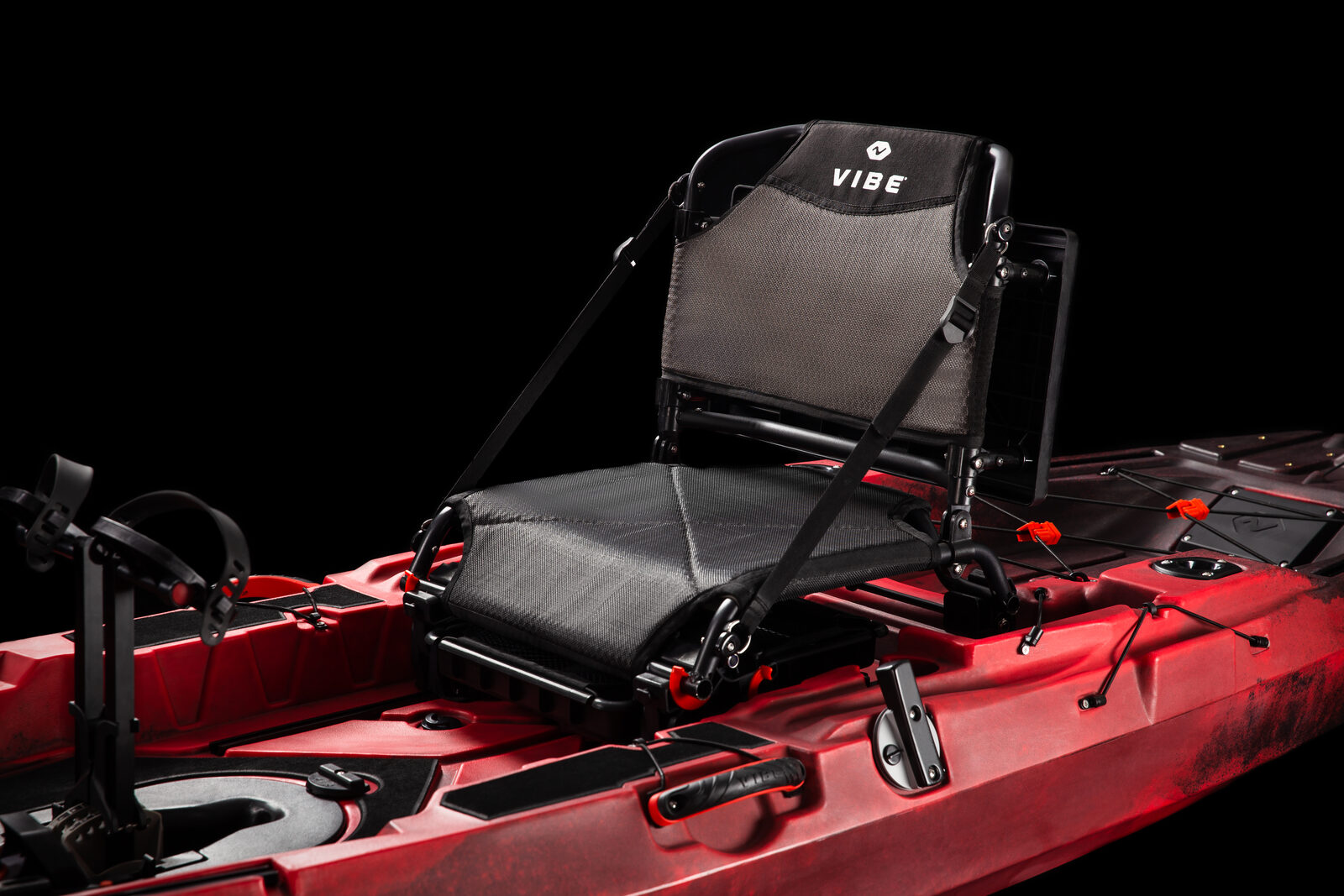
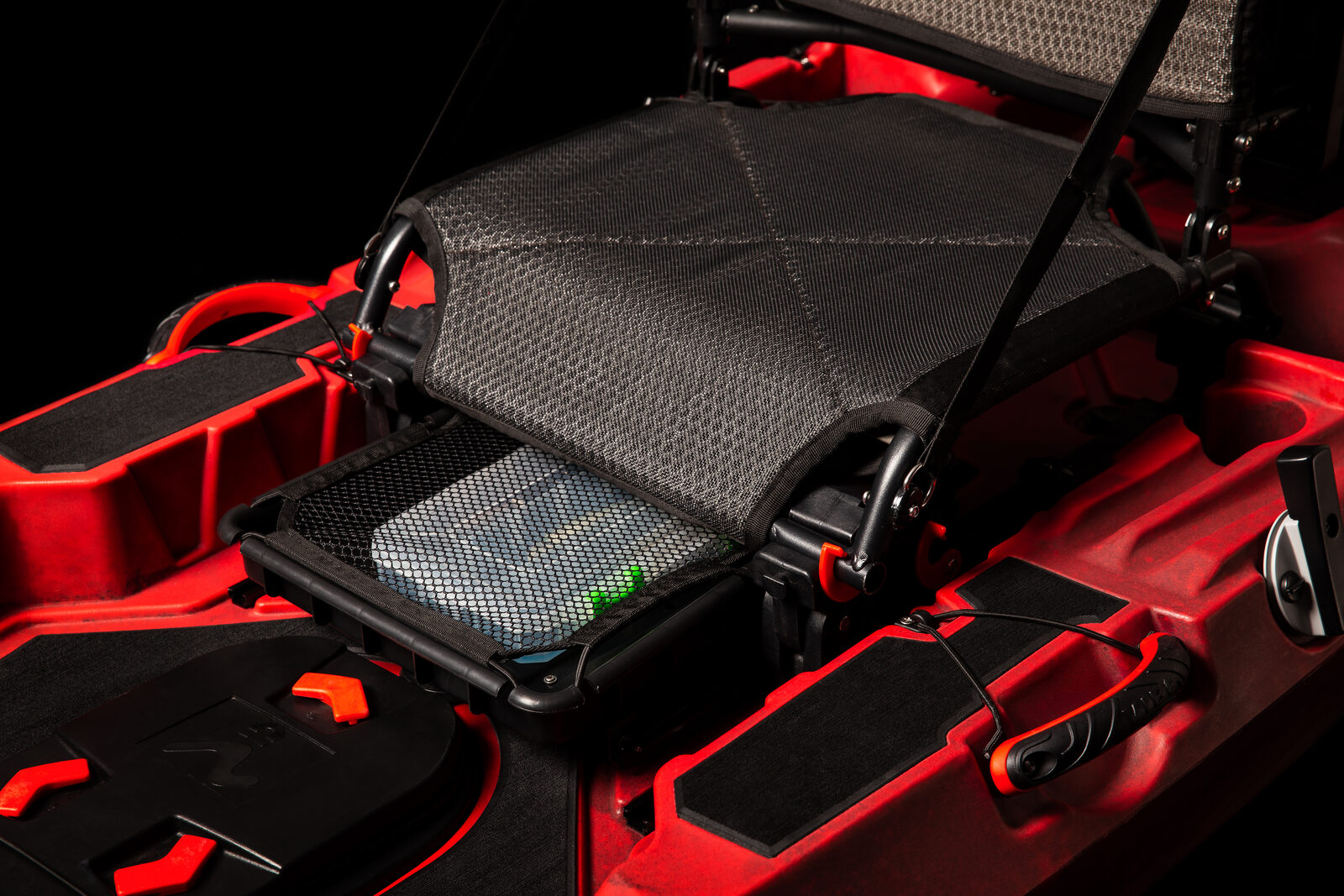
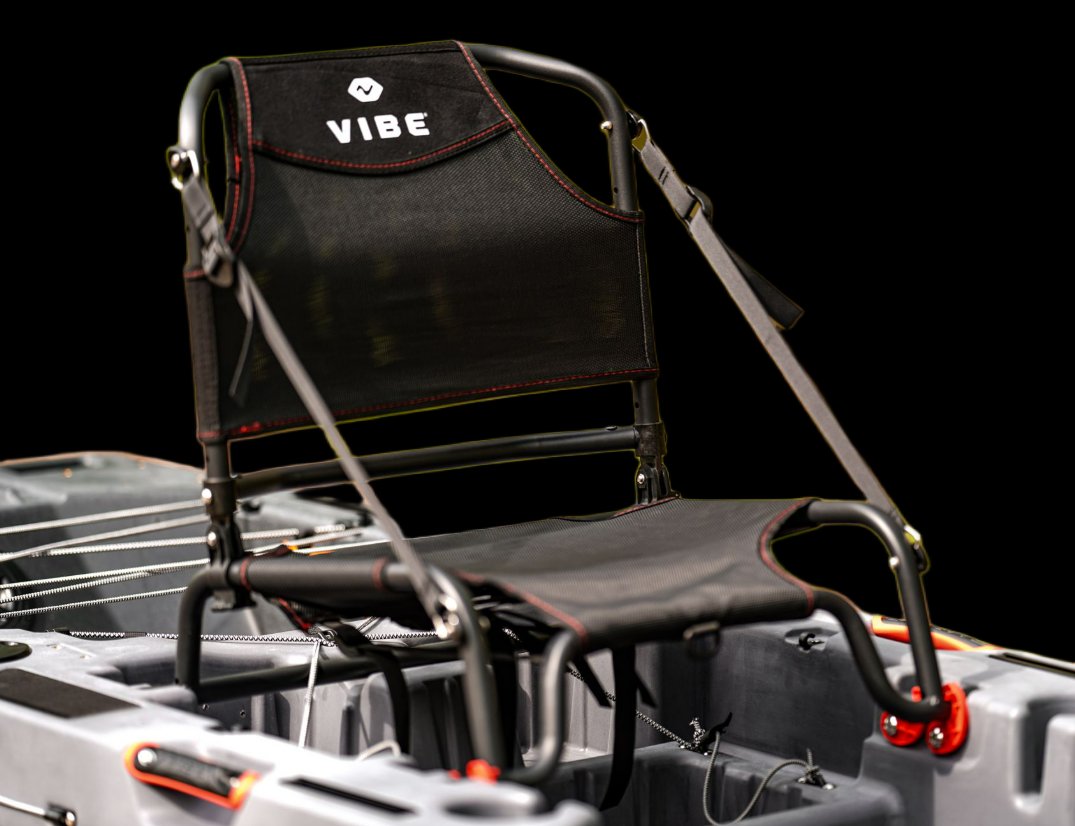
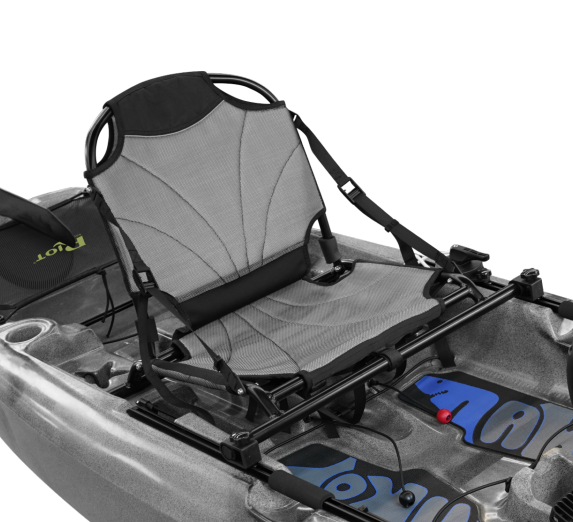
Vibe's third-generation framed kayak seat. Elevated frame for visibility and under-seat storage; updated geometry reduces leg pressure and makes standing transitions easier. Standard on the Sea Ghost 105. Compatible with Vibe's Summit Perch system.
Trolling Motor
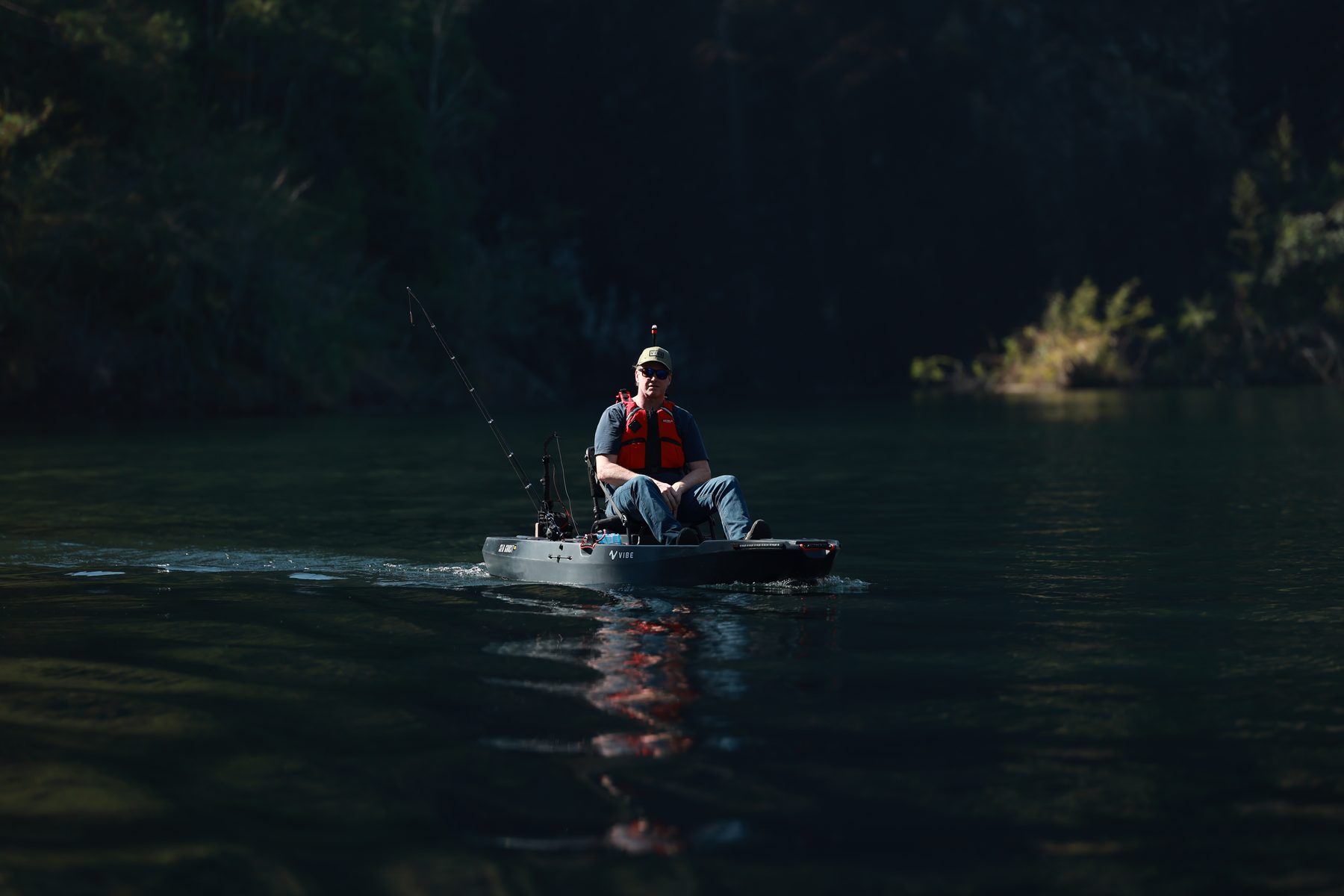
A small electric motor used to move a fishing boat or kayak slowly while fishing. Powered by a 12V battery. Two main mounting positions: bow-mount (front of the boat — better for spot-lock and precision) and transom-mount (back — simpler and cheaper). The Sea Ghost 105 is the only SAIL kayak with reinforced mounts for both.
Spot-Lock
A GPS-controlled feature on premium trolling motors (Minn Kota, Garmin Force, etc.) that holds a boat in a fixed spot using the motor — like an electronic anchor. Bow-mount motors are required. The Sea Ghost 105's bow mounting points are spot-lock-ready.
Battery Compartment
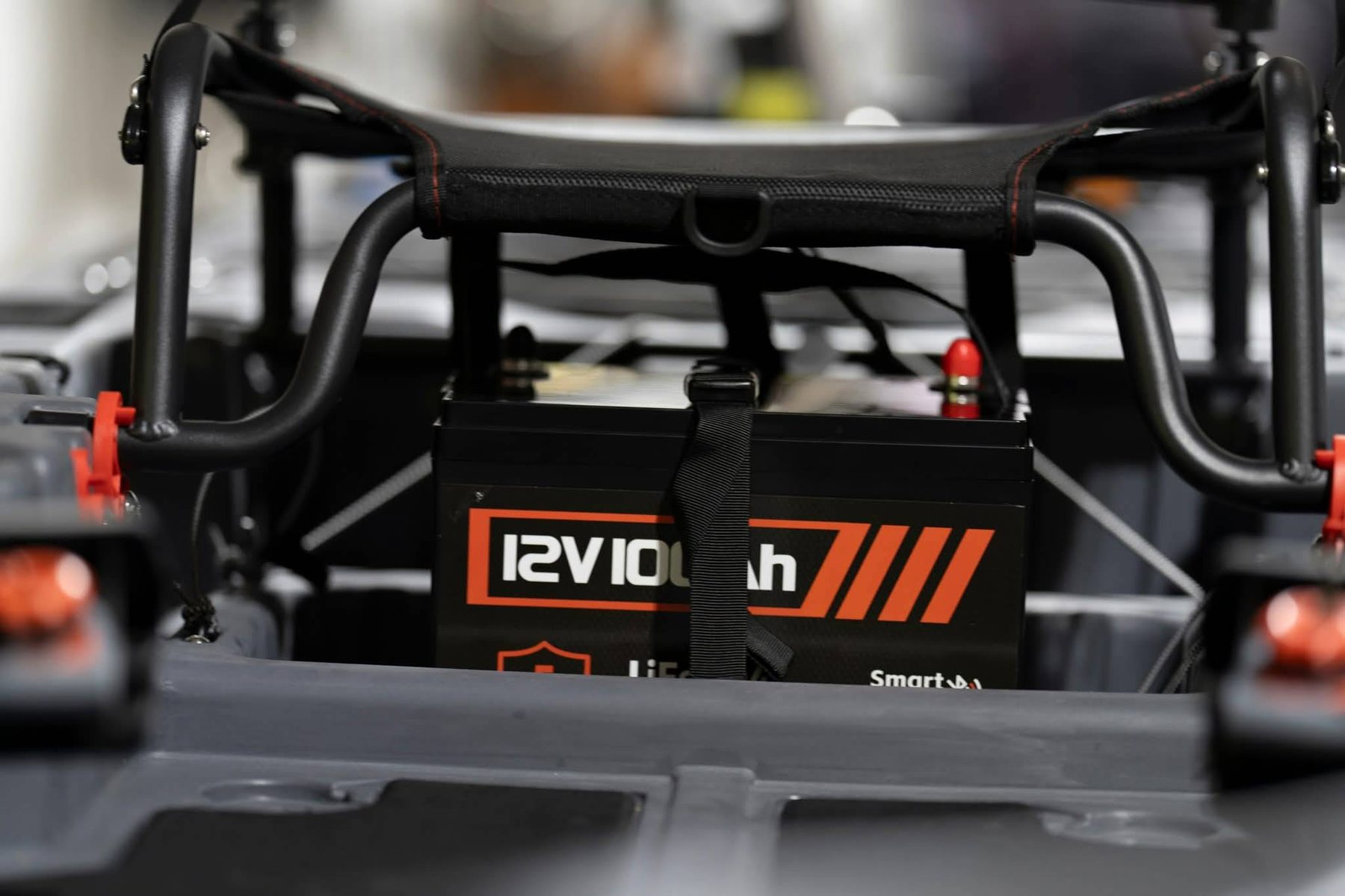
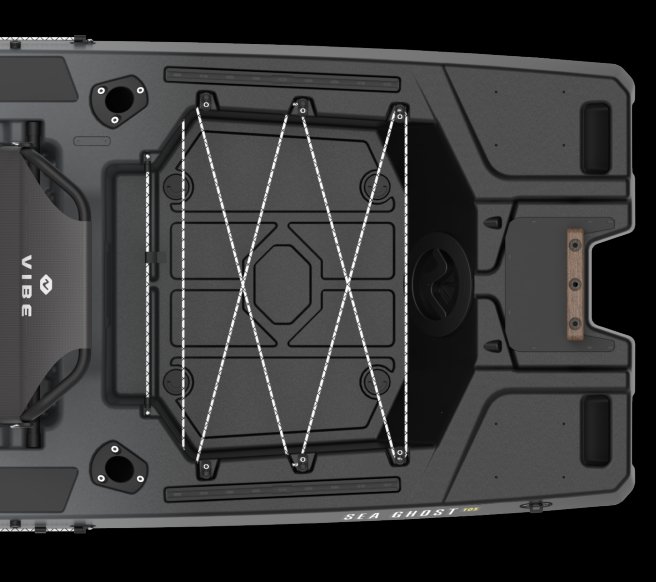
A molded-in storage bay sized to hold a standard 12V trolling-motor battery (Group 24 / Group 27). Center-mounted on the Sea Ghost 105 to keep weight balanced. Built-in retention straps prevent shifting in rough water. Most kayaks require an aftermarket battery box strapped to the deck — this is significantly cleaner.
Transducer Pass-Through
A factory-cut hole and channel system that lets a sonar transducer mount through the hull without drilling. The cable routes inside the hull instead of across the deck. The Sea Ghost 105 includes this for popular Lowrance, Garmin, and Humminbird transducers.
Impulse Drive
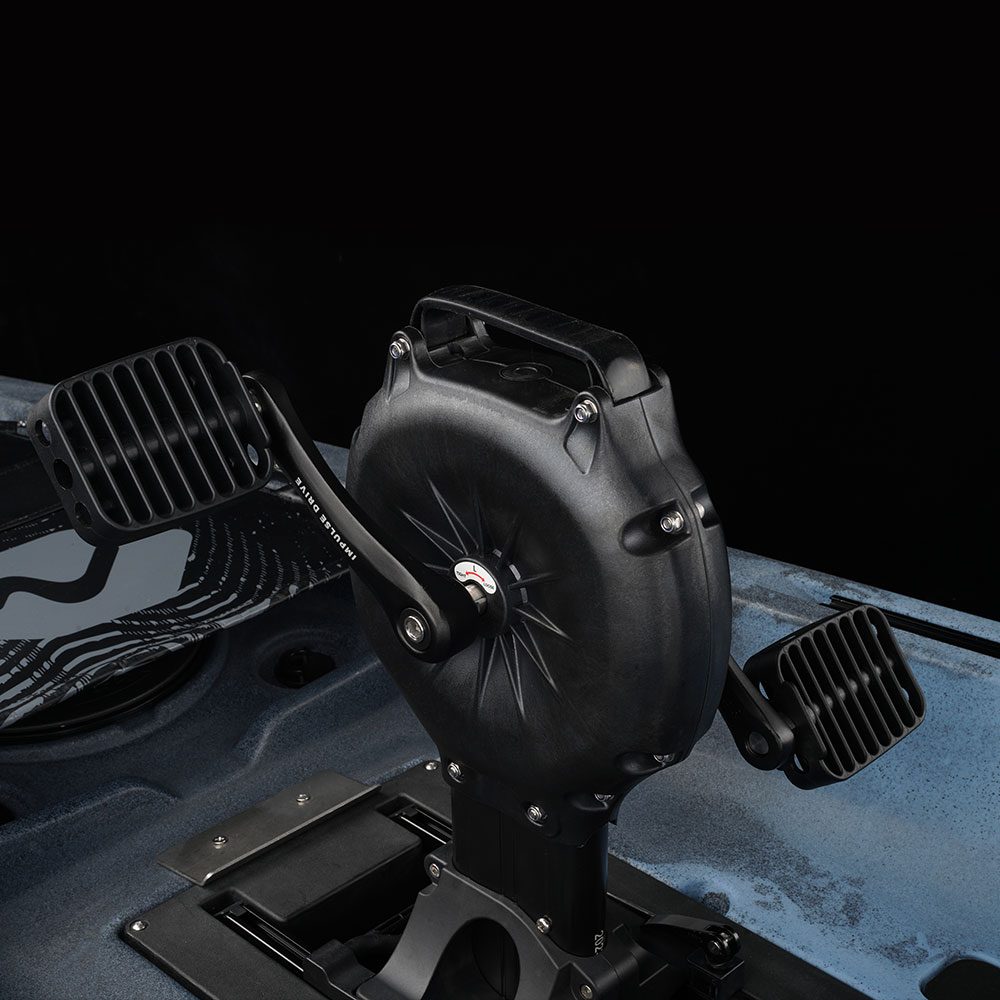
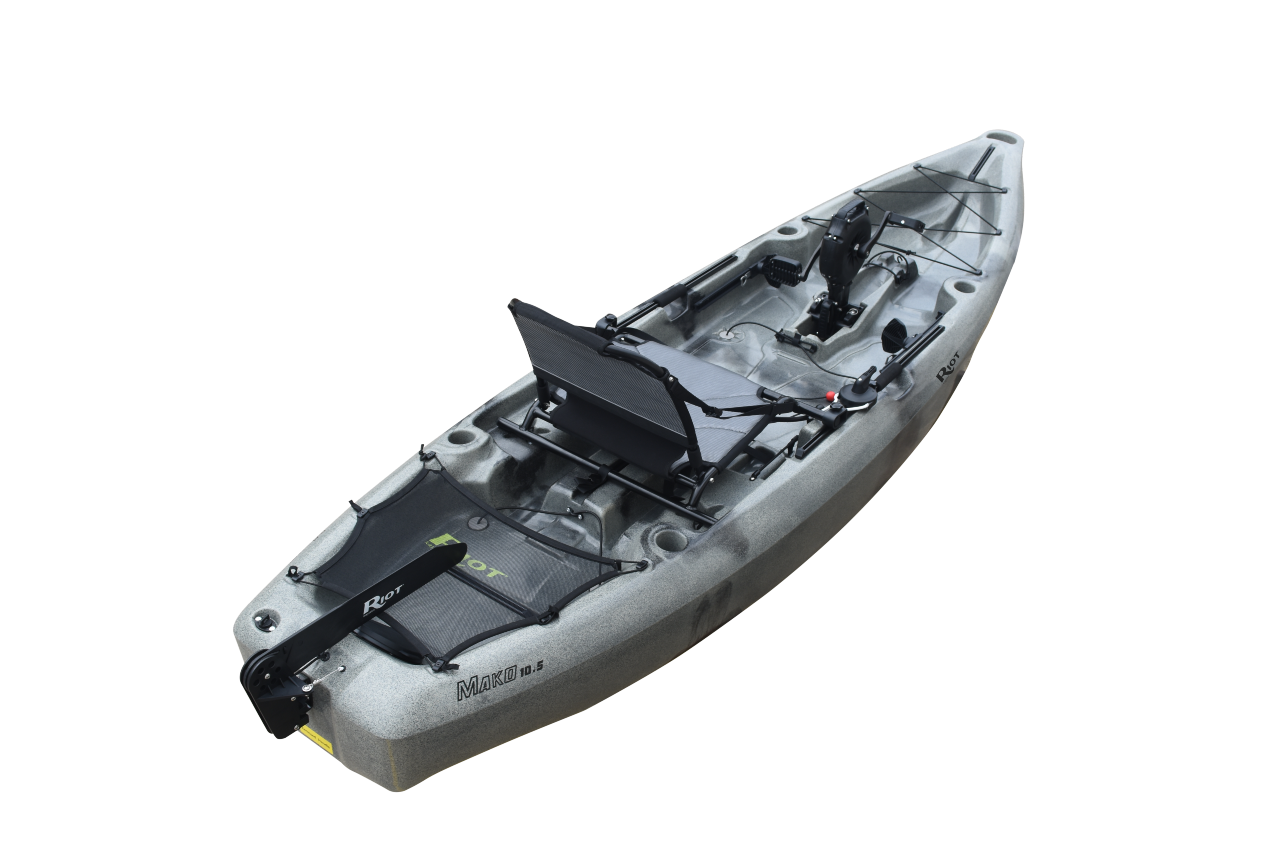
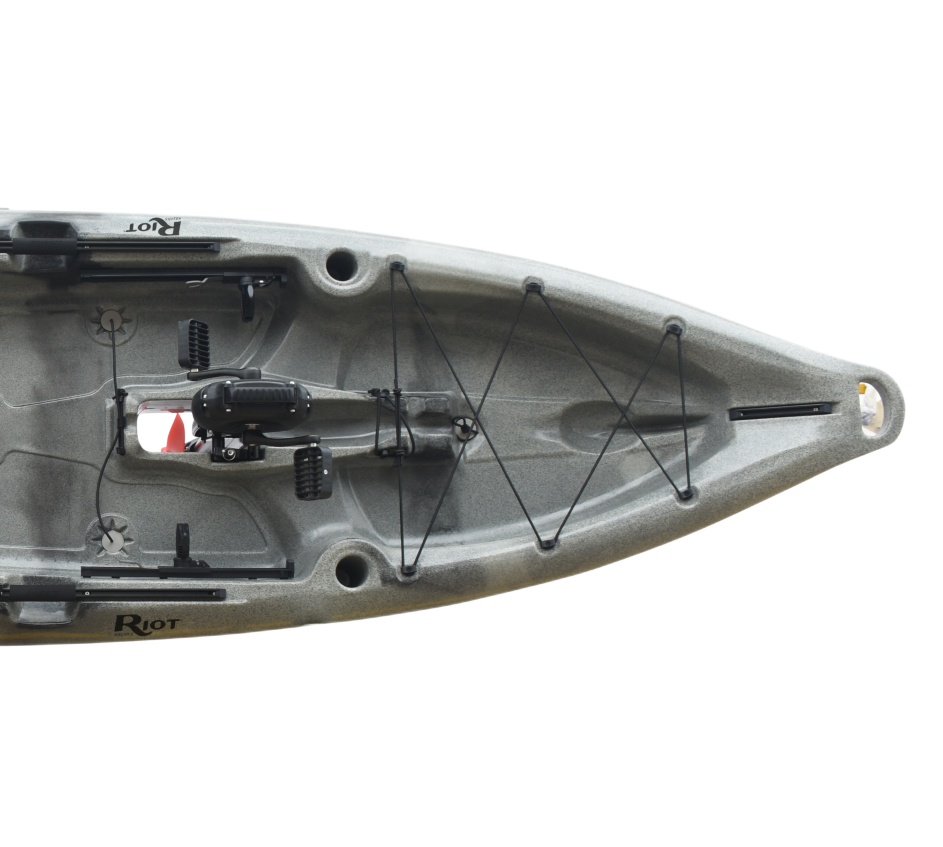
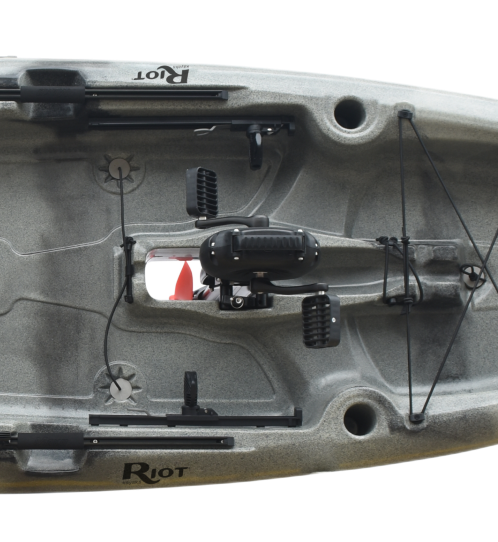
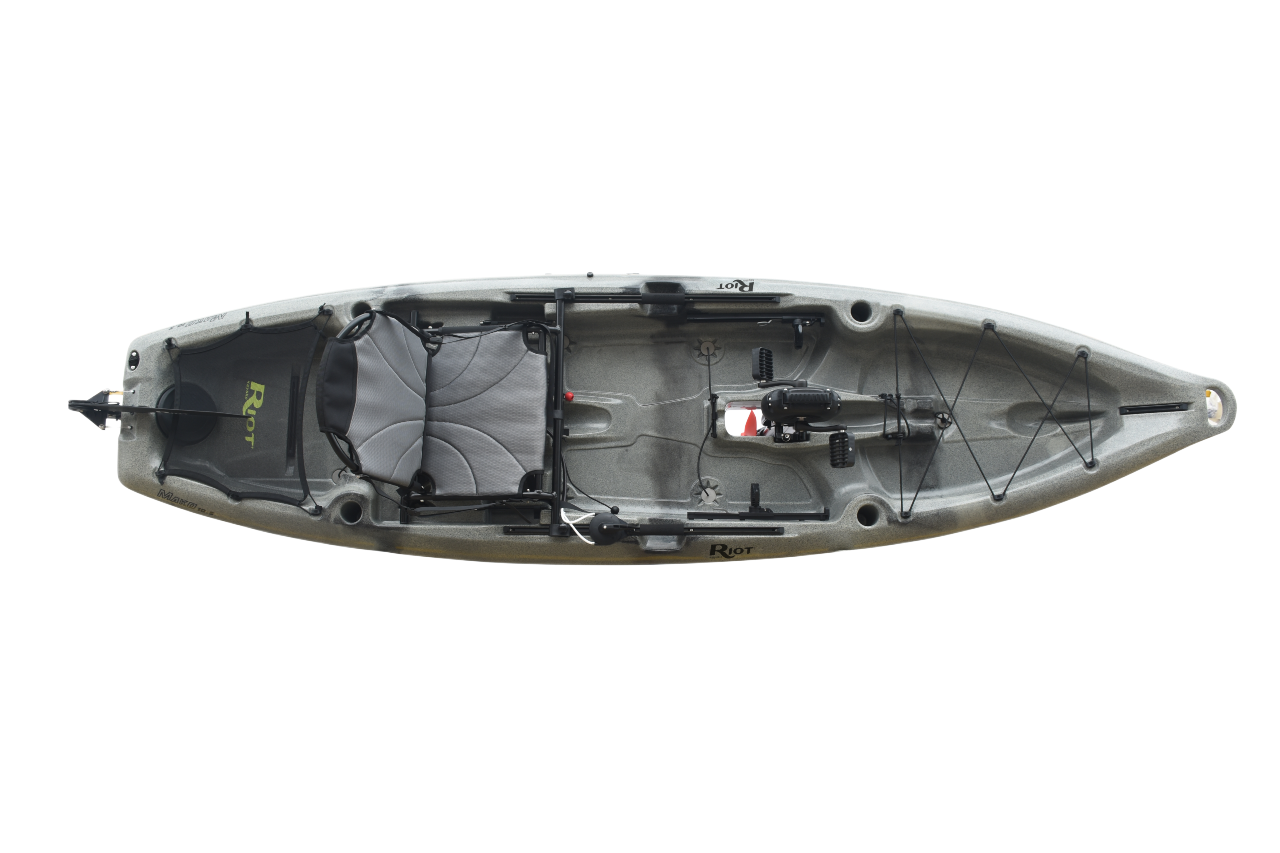
A propeller-style pedal-drive unit used on the Riot Mako 10.5 and (as a Versa Pod option) on the Vibe Shearwater 125. At 7.2 lb / 3.25 kg, it's the lightest pedal drive on the market. The propeller is reversible — pedal forward, pedal backward, no need to lift the drive. Removable for transport.
Pilot Rudder
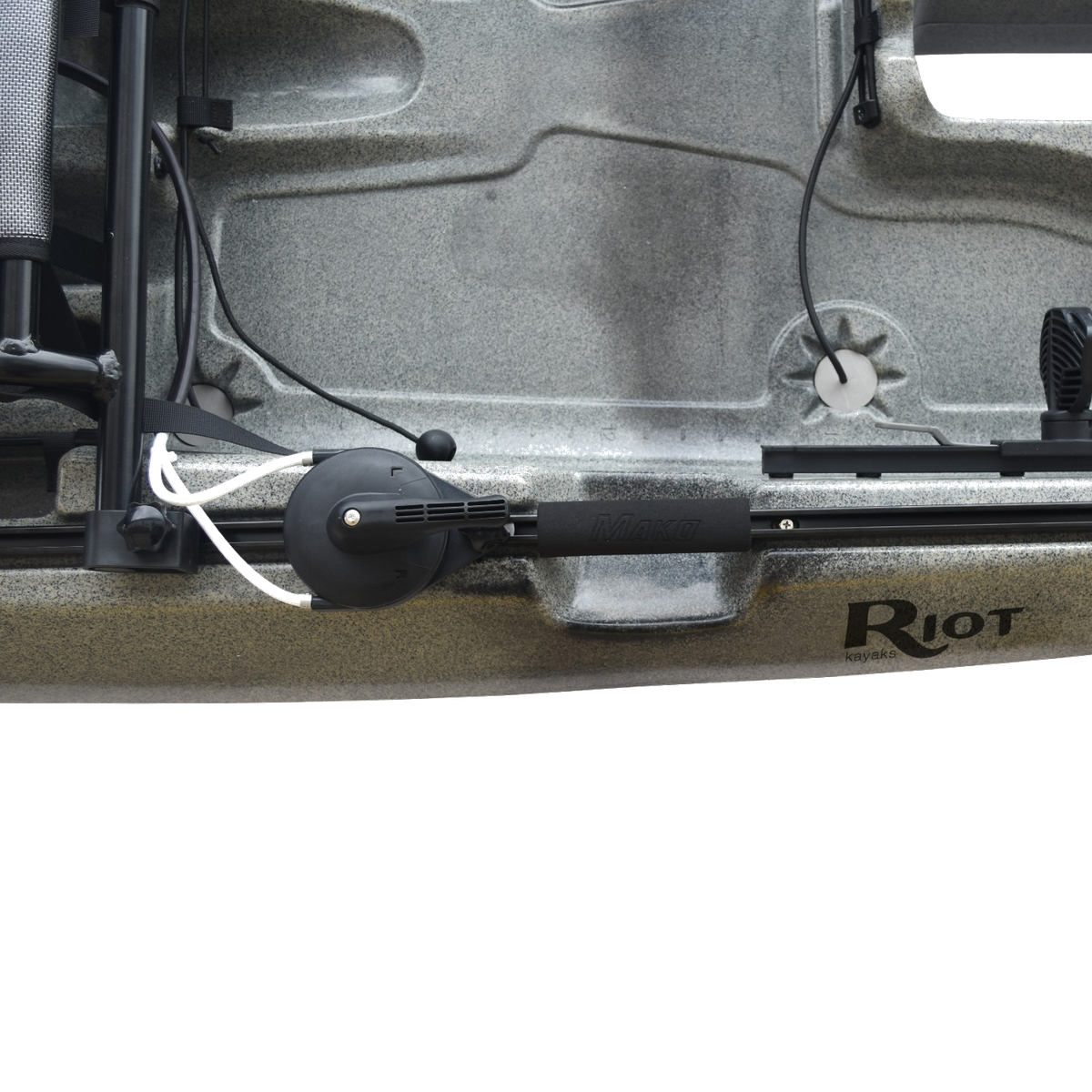
Riot's hand-controlled rudder steering system. The steering lever sits within reach of the cockpit; pulling it deploys or stows the rudder, side-to-side movement steers. Different from foot-controlled rudders (used on the Shearwater 125) — a matter of customer preference, not a feature gap.
Crossmax HDPE
Riot's proprietary high-density polyethylene formulation used on the Mako 10.5 and other Riot hulls. Same family as the rotomolded HDPE used by Vibe and most fishing kayak makers, but with Riot's specific spec. Single-piece molded, lifetime hull warranty for the original owner.
Bulkhead
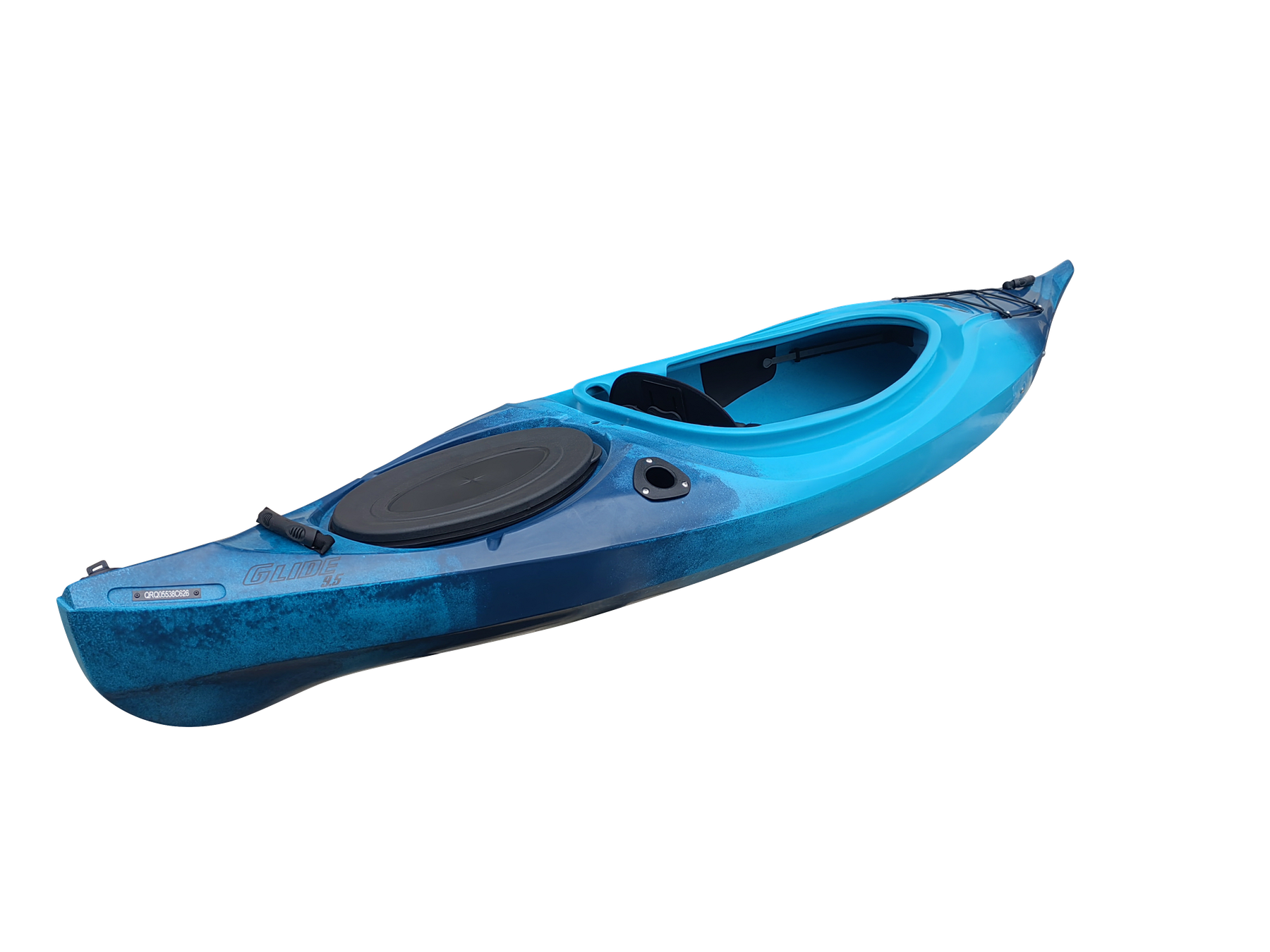
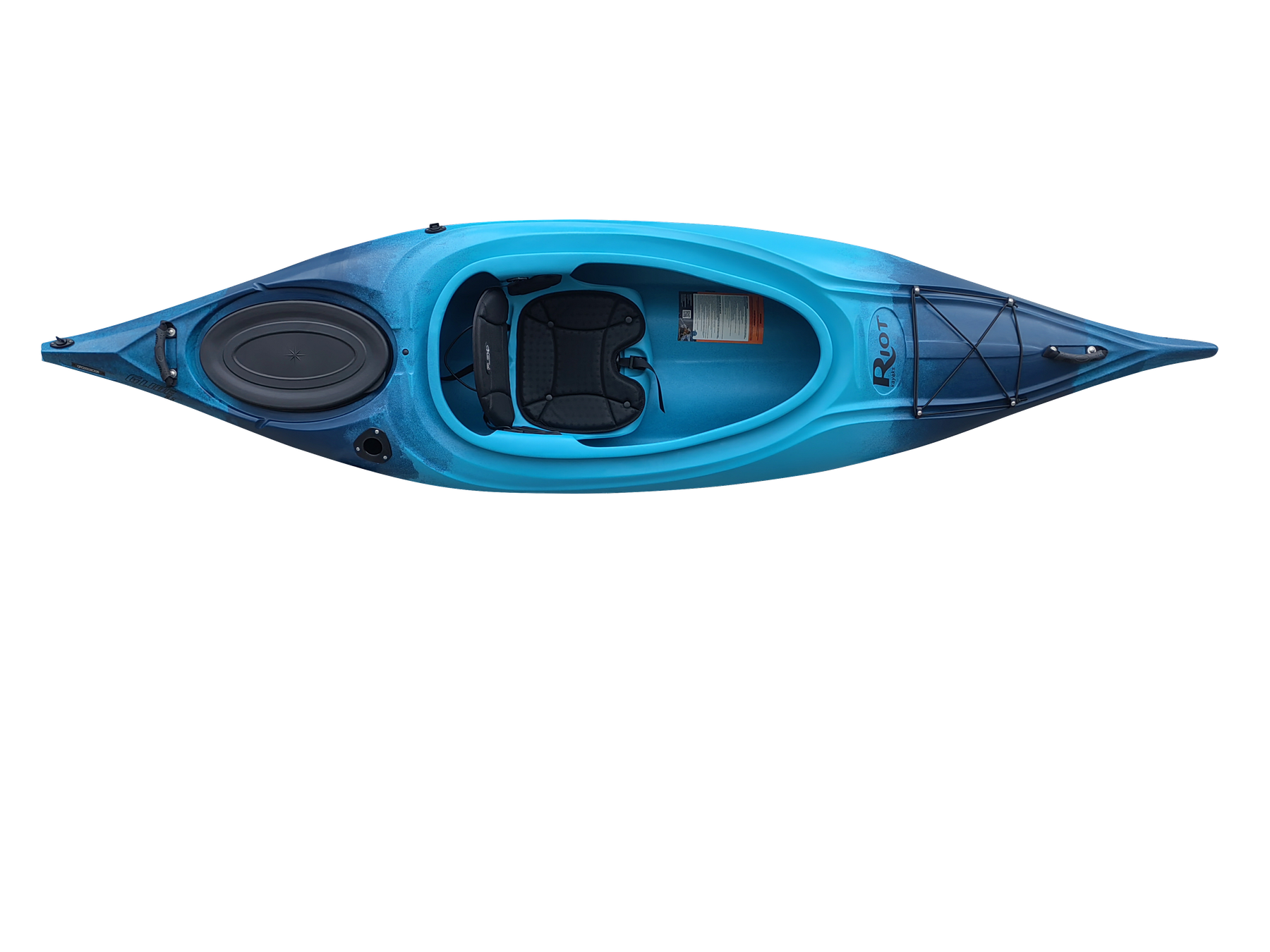
An internal wall inside the kayak hull that creates a sealed compartment. Common in sit-inside kayaks like the Glide 9.5 — the bulkhead behind the seat seals off the rear hatch into a watertight zone, adds structural rigidity to the hull, and traps an air pocket that improves buoyancy if the boat ever swamps.
Flotation Bag
An inflatable air bag installed inside a kayak's bow or stern compartment. Fills the empty hull space with sealed air. If the kayak ever fills with water — flip, swim, big wave — the flotation bag prevents that section from sinking and keeps the kayak floating high enough to bail out and remount. The Glide 9.5 includes a front flotation bag standard.
Double-Arch Hull
A hull design with two parallel arches running fore-to-aft along the bottom. The two contact points provide stability similar to a W tunnel hull but proportioned for a smaller, lighter recreational kayak. Used on the Glide 9.5. Trade-off: more stability than a flat or rounded hull, slightly less straight-line speed than a long V-hull.
Flex 4 Seat
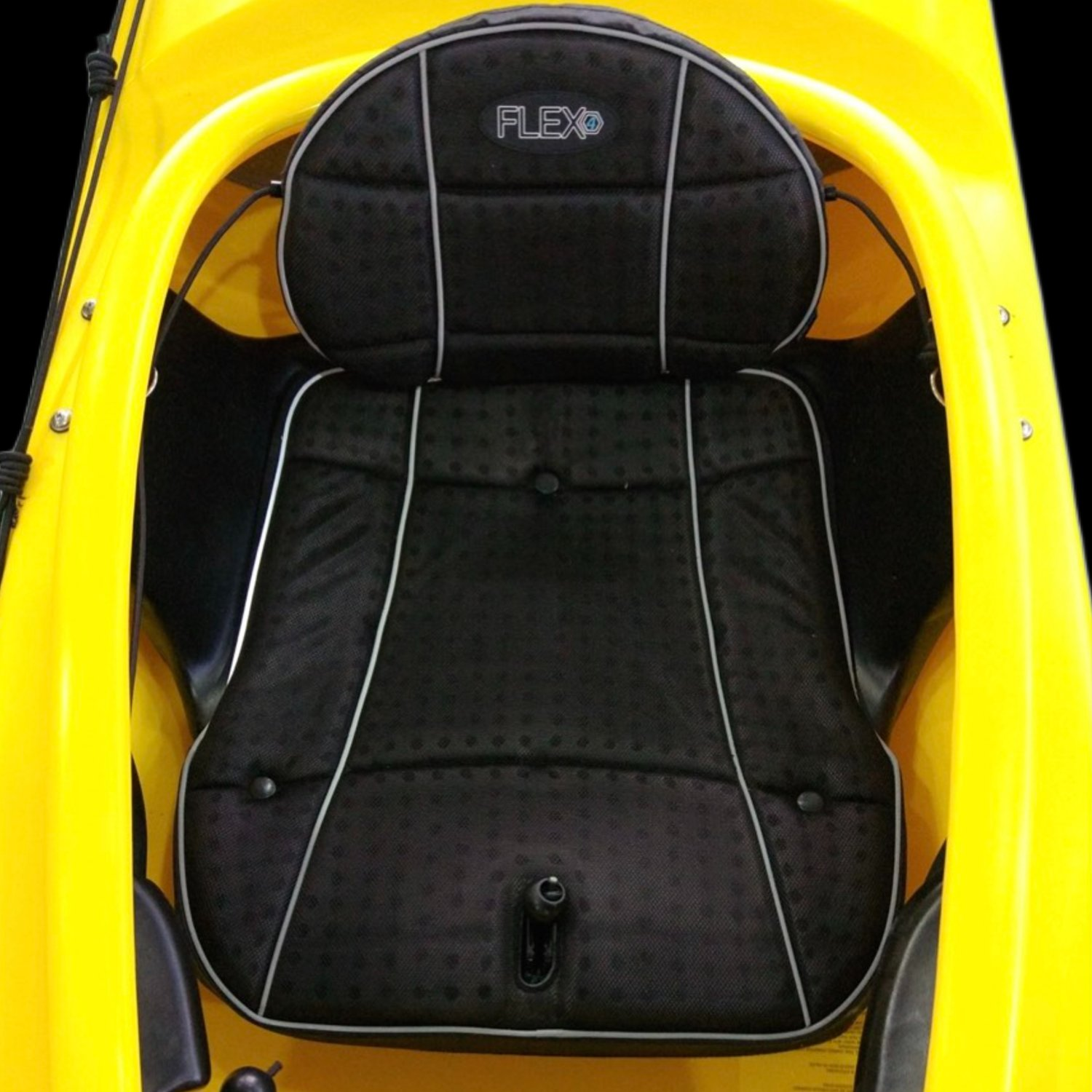
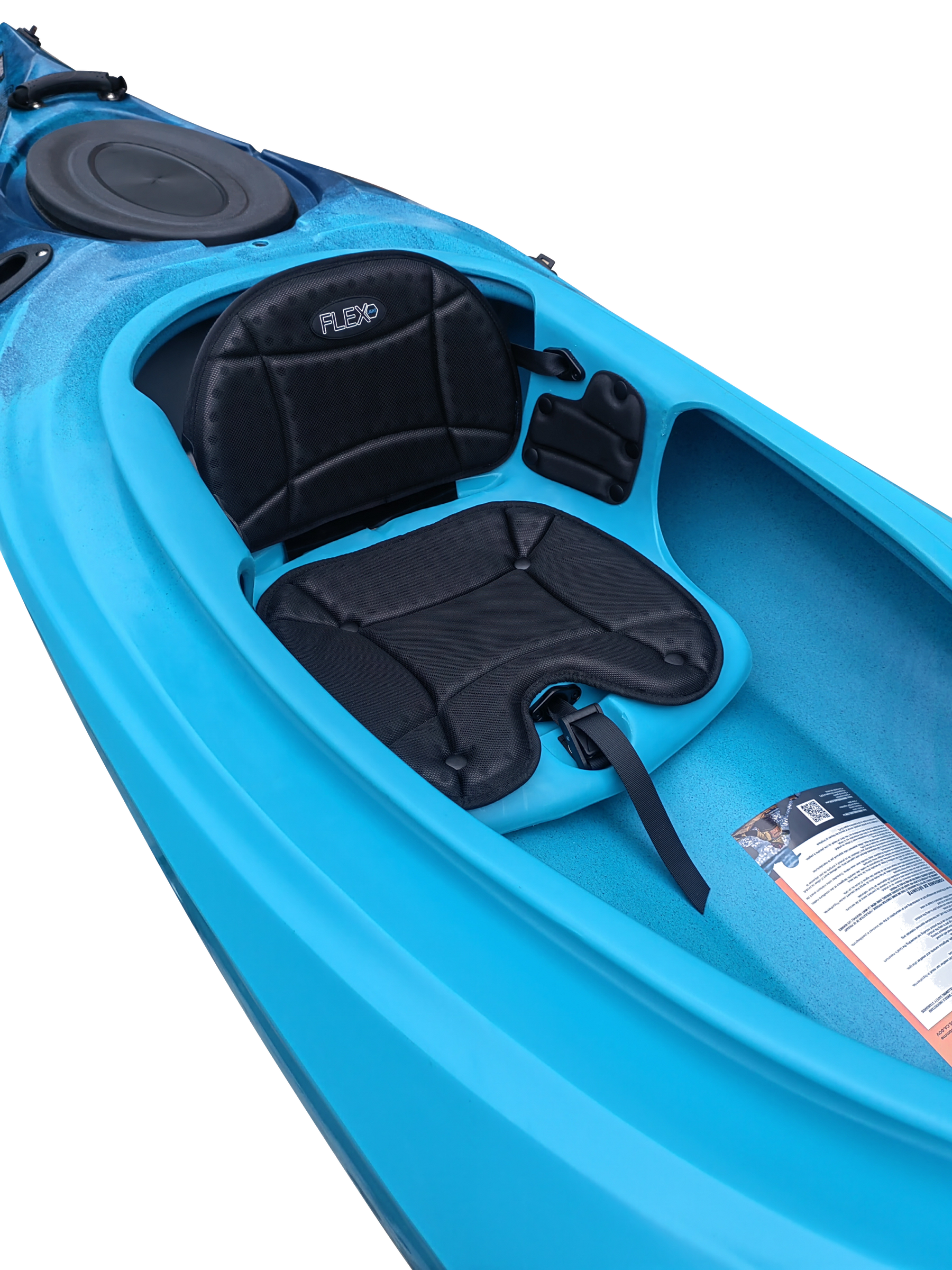
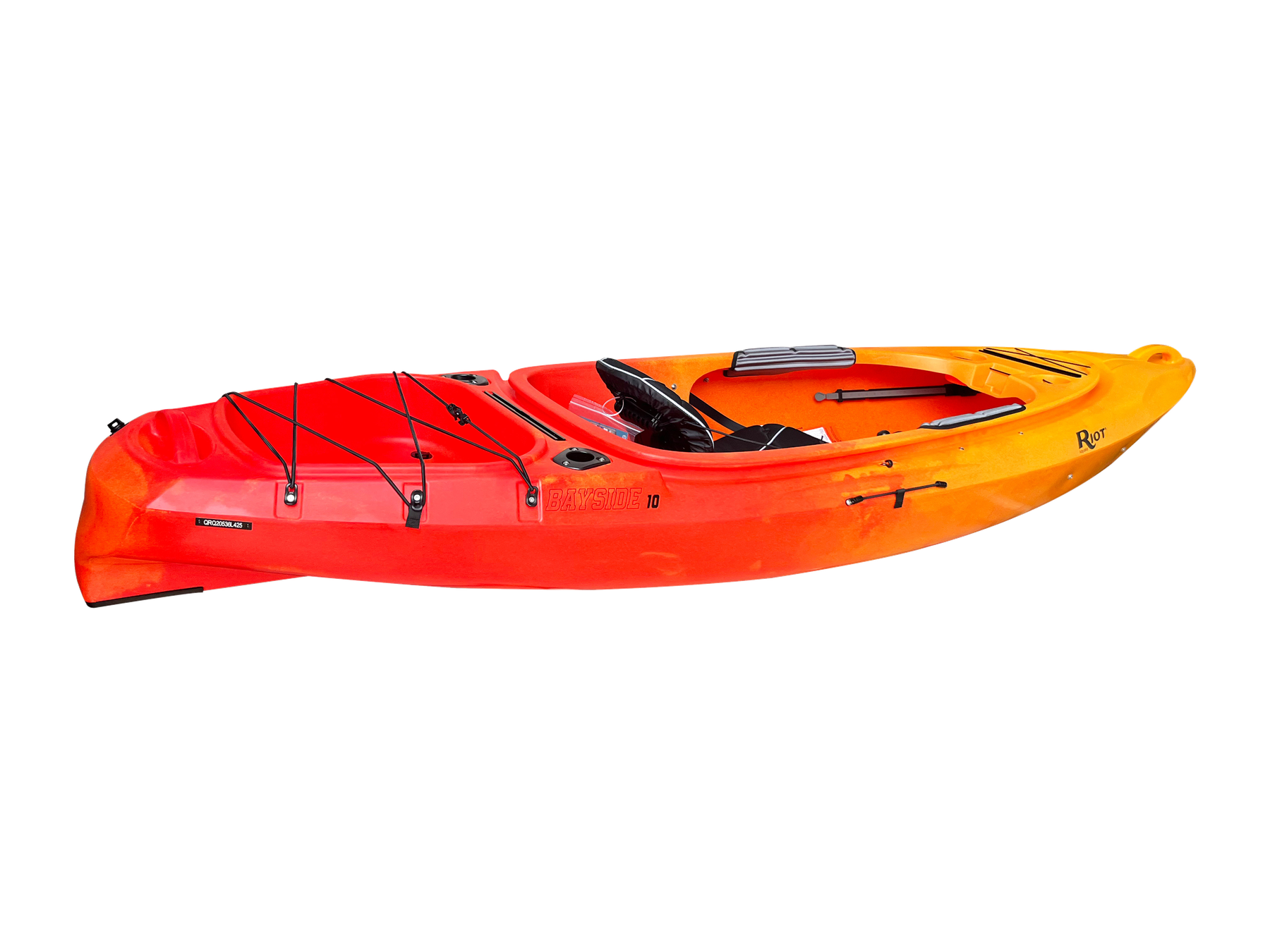
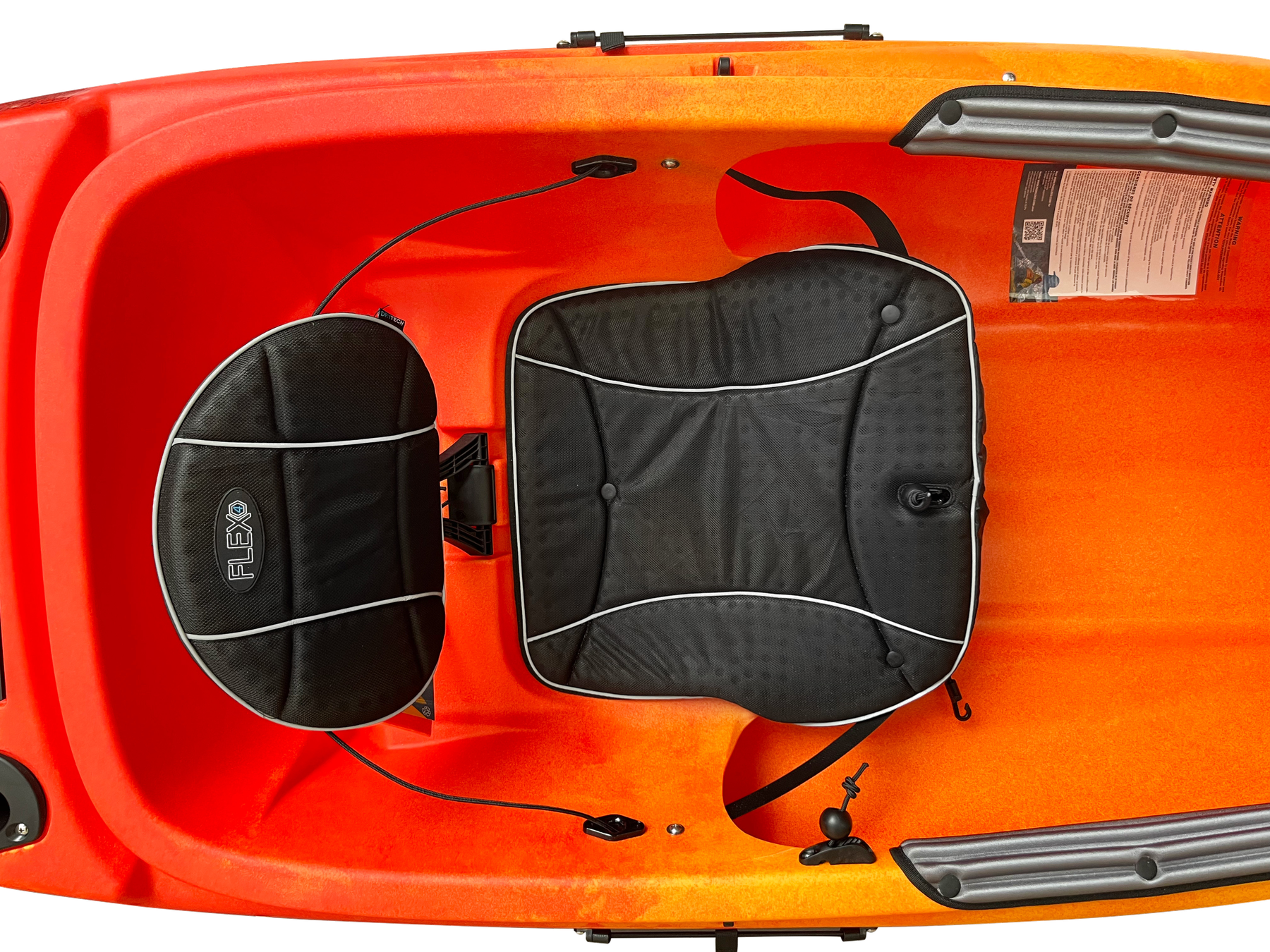
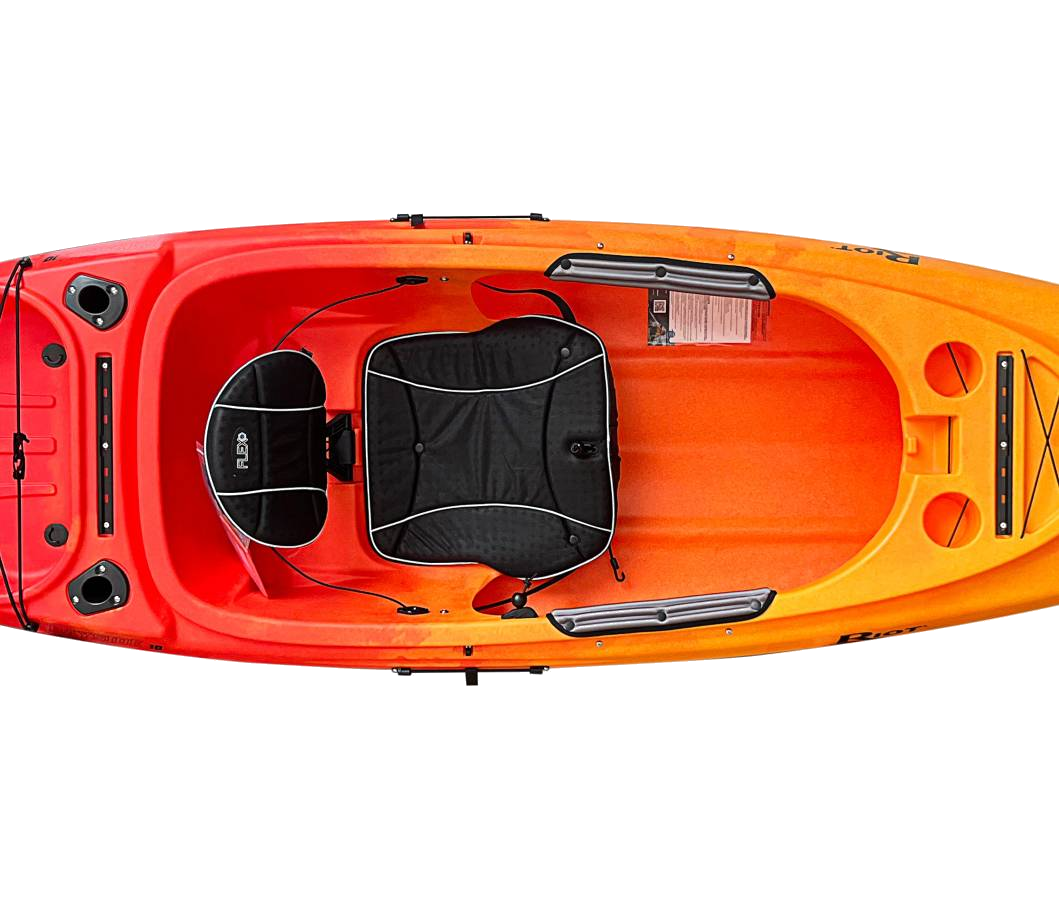
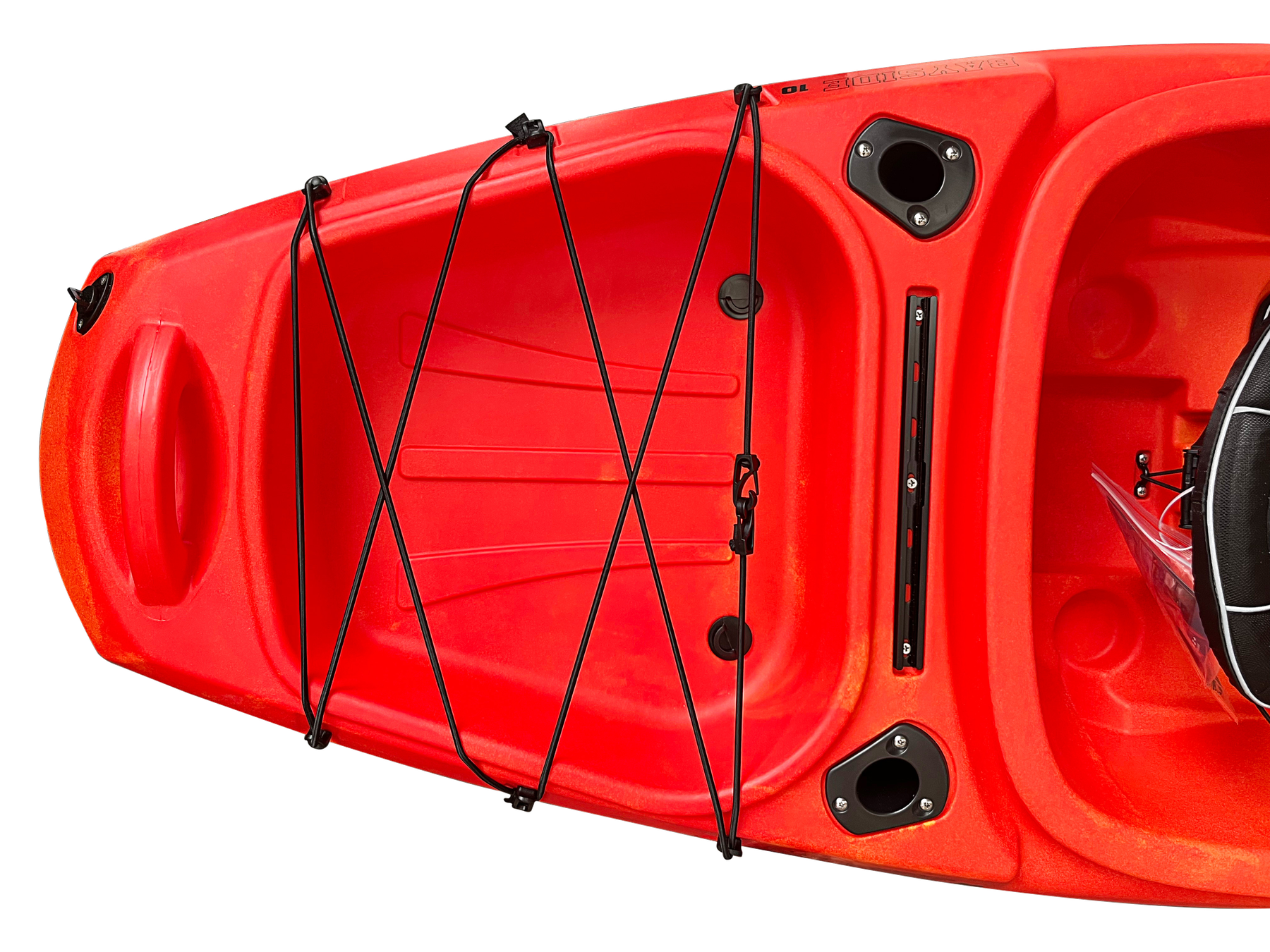
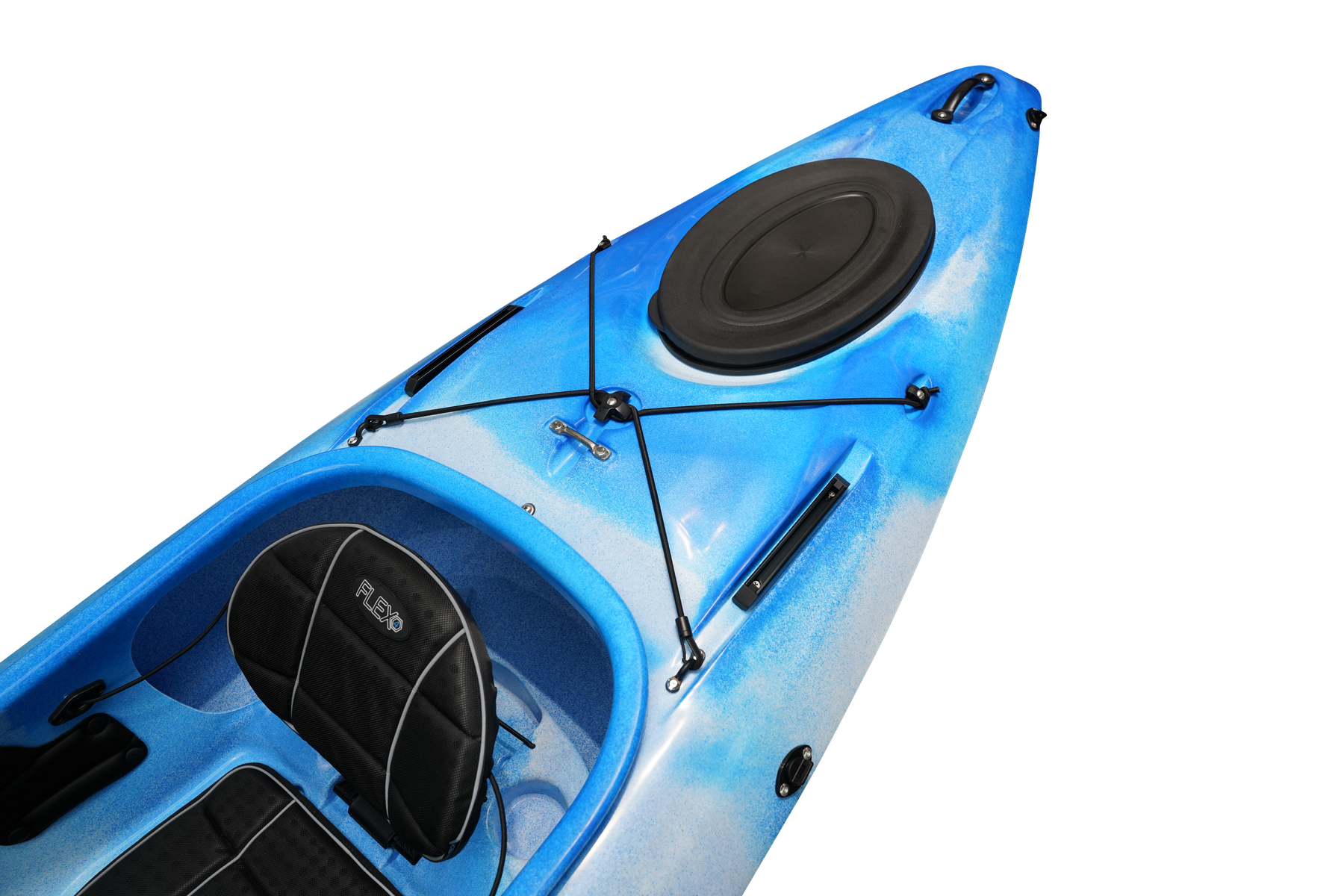
Riot's premium adjustable seating system, used on the Bayside 10, Bayside 12 LV, and Edge series. Two adjustments: the seat base moves up and down under the thigh (for more or less thigh support and to fit perfectly under the cockpit lip), and the backrest tilts through four positions. The upgrade over Riot's Comfort Lite Seat (back-only adjustment, fixed base — used on the Glide 9.5).
Cockpit Dashboard
A molded storage tray at the front edge of the cockpit, sized for a phone, water bottle, sunglasses, sunscreen, lures, or pliers. The Bayside 10 has one; the Glide 9.5 does not. Useful as a fast-access dry-ish zone for the small items a paddler reaches for repeatedly.
Paddle Park
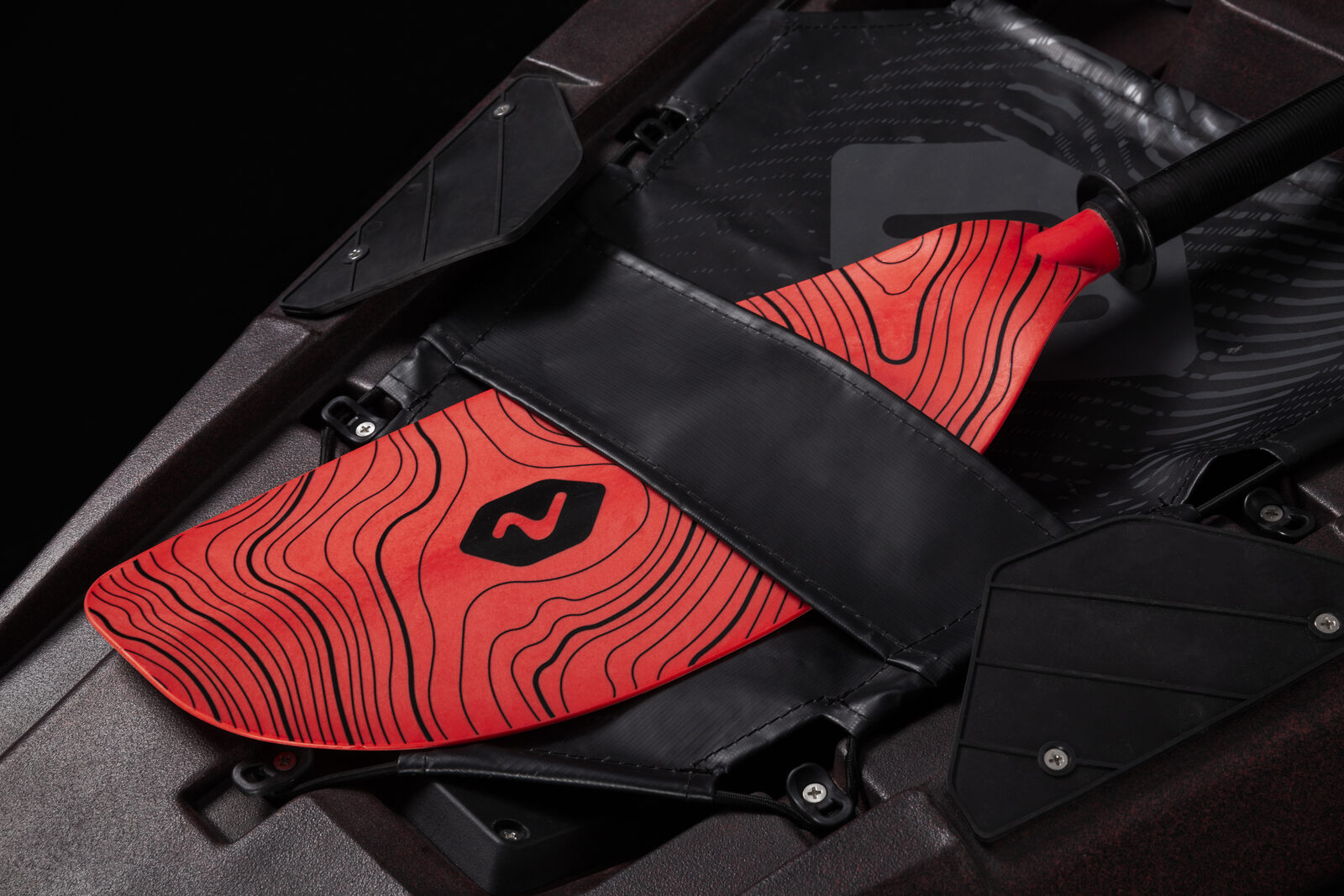
A small clip or holder on the side deck designed to secure a 2-piece paddle when not in use — for fishing, photography, loading/unloading, or any moment when the paddler needs both hands free. Standard on the Mako 10.5 and Bayside 10.
Skeg
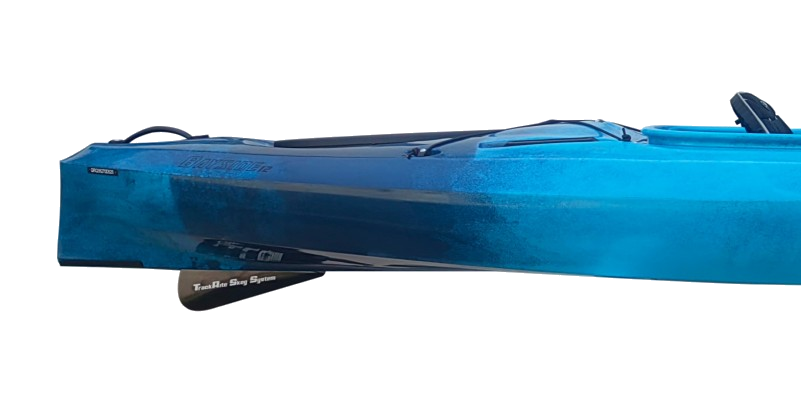
A small fin built into the underside of a kayak's stern that deploys downward to improve tracking — keeping the kayak going in a straight line, especially in wind. Different from a rudder (which steers): a skeg is fixed in place once deployed; it can only be up or down. Standard on the Bayside 12 LV. Stowed for shallow water, beach landings, and transport.
LV (Low Volume)
Riot's designation for the lower-deck-height variant of a kayak. The Bayside 12 LV is the Low Volume version of the Bayside 12; Riot also makes a Bayside 12 HV (High Volume) with more deck height. SAIL stocks the LV. Important: "LV" refers to the hull profile, not the cockpit size — the Bayside 12 LV still has a generous 59.6" × 22.4" cockpit that fits virtually any adult and accepts a 6XL spray skirt.
Blowmolded HDPE
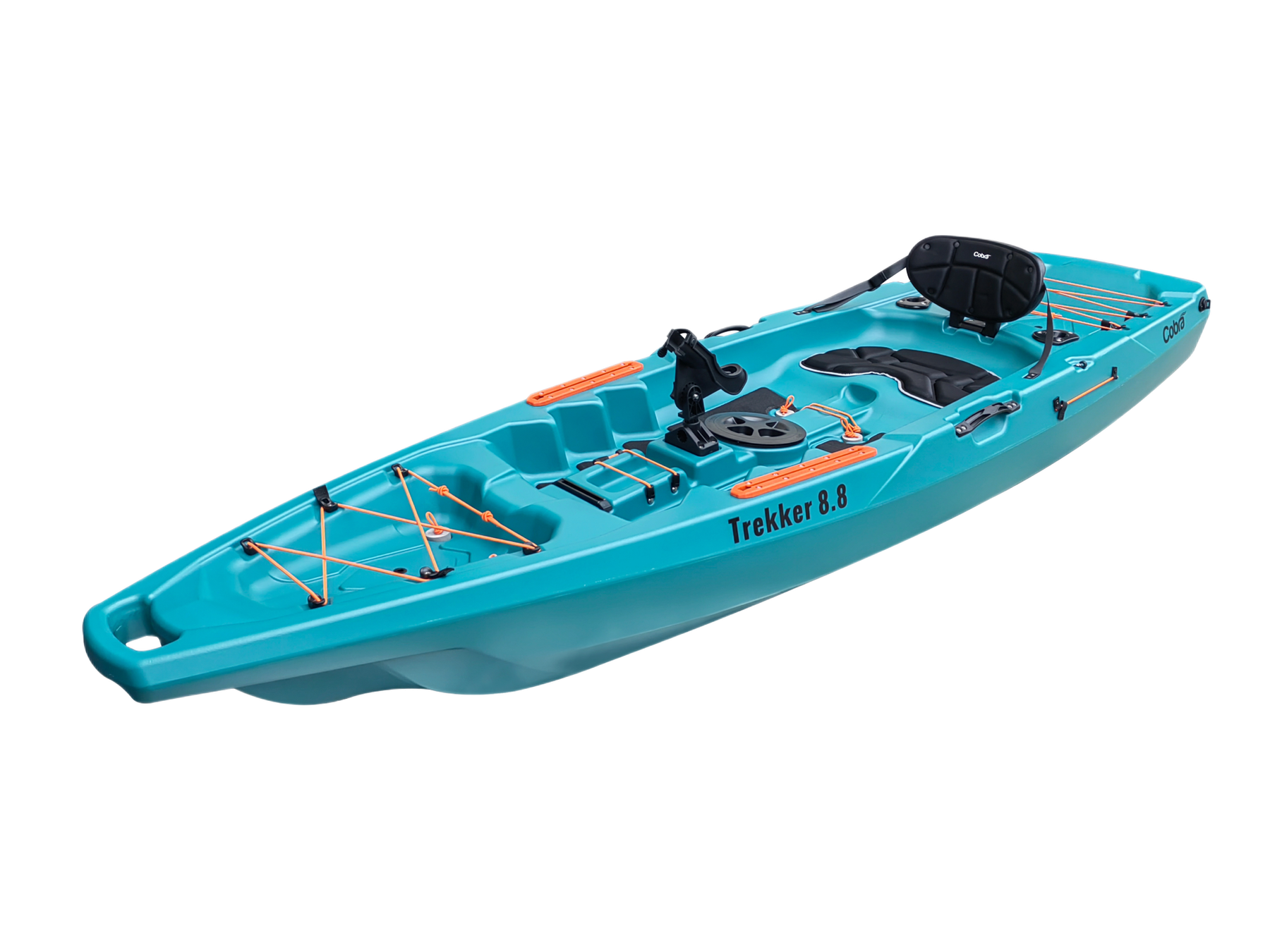
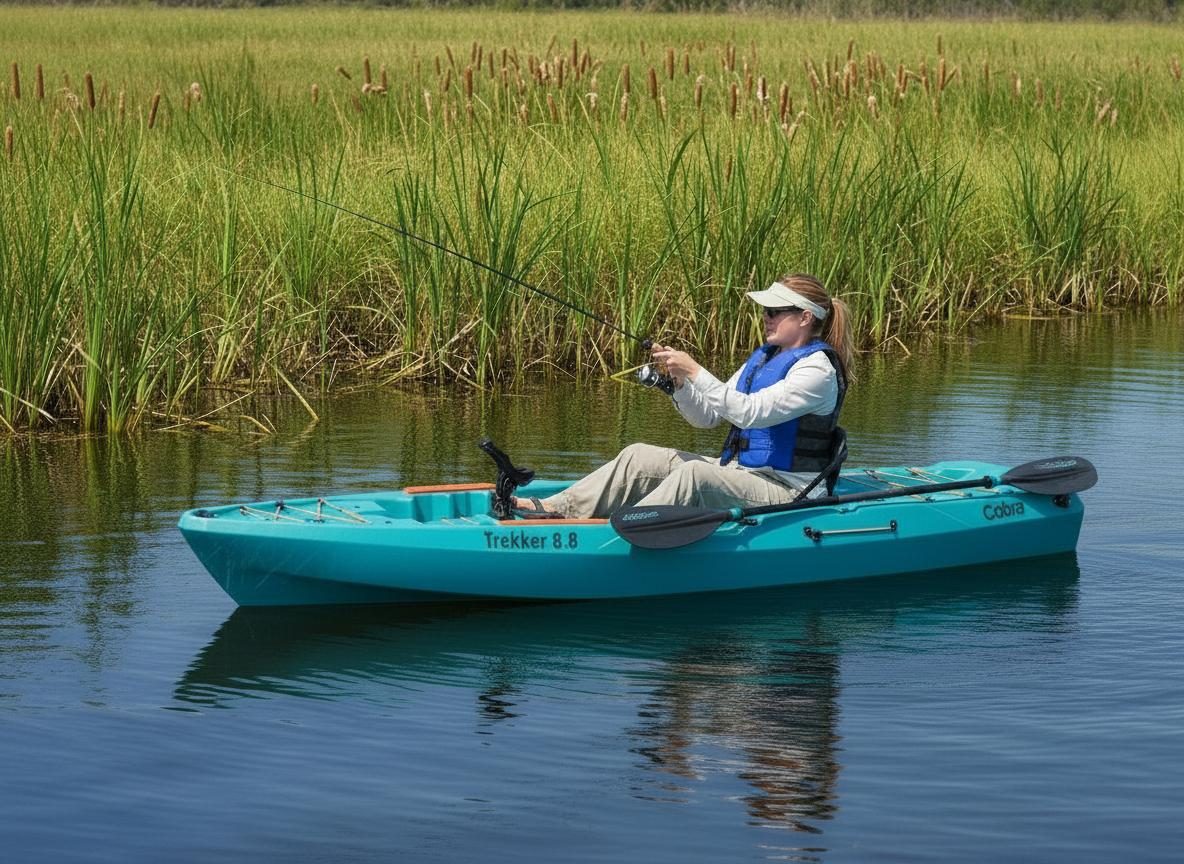
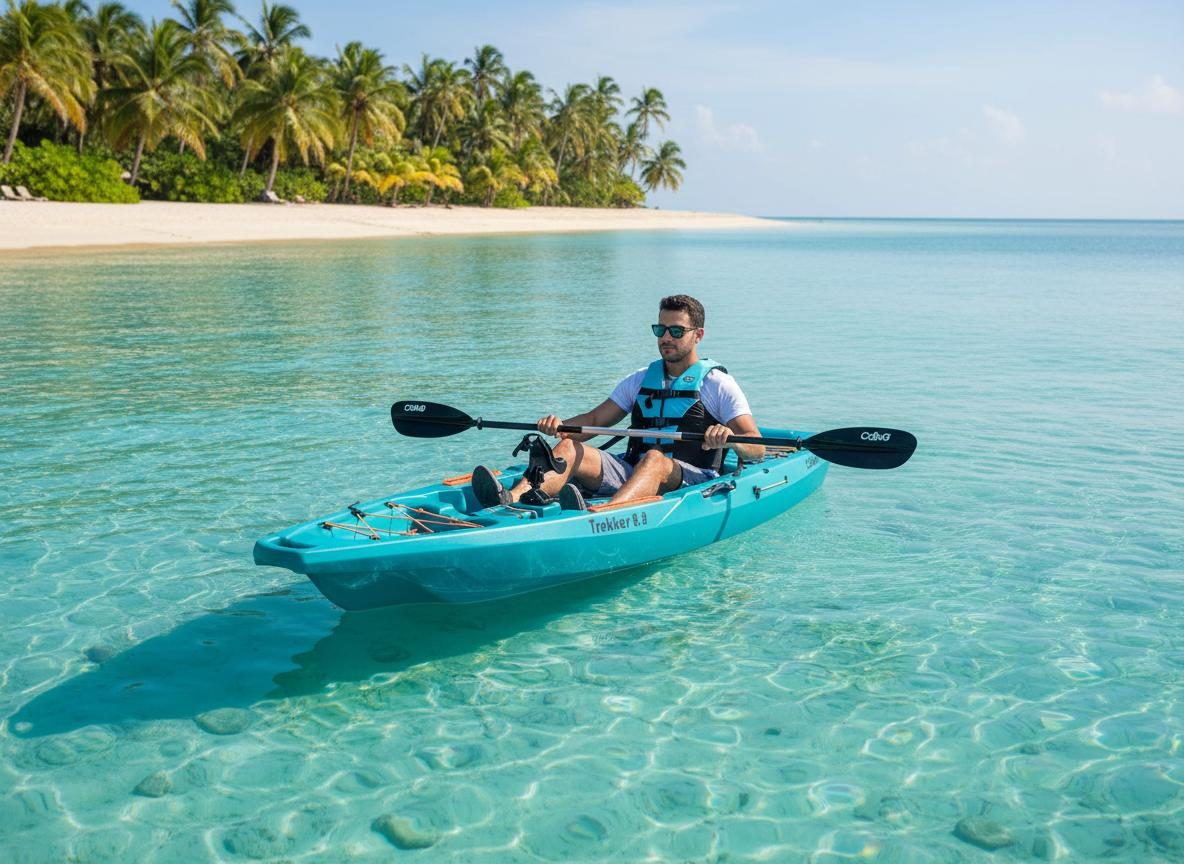
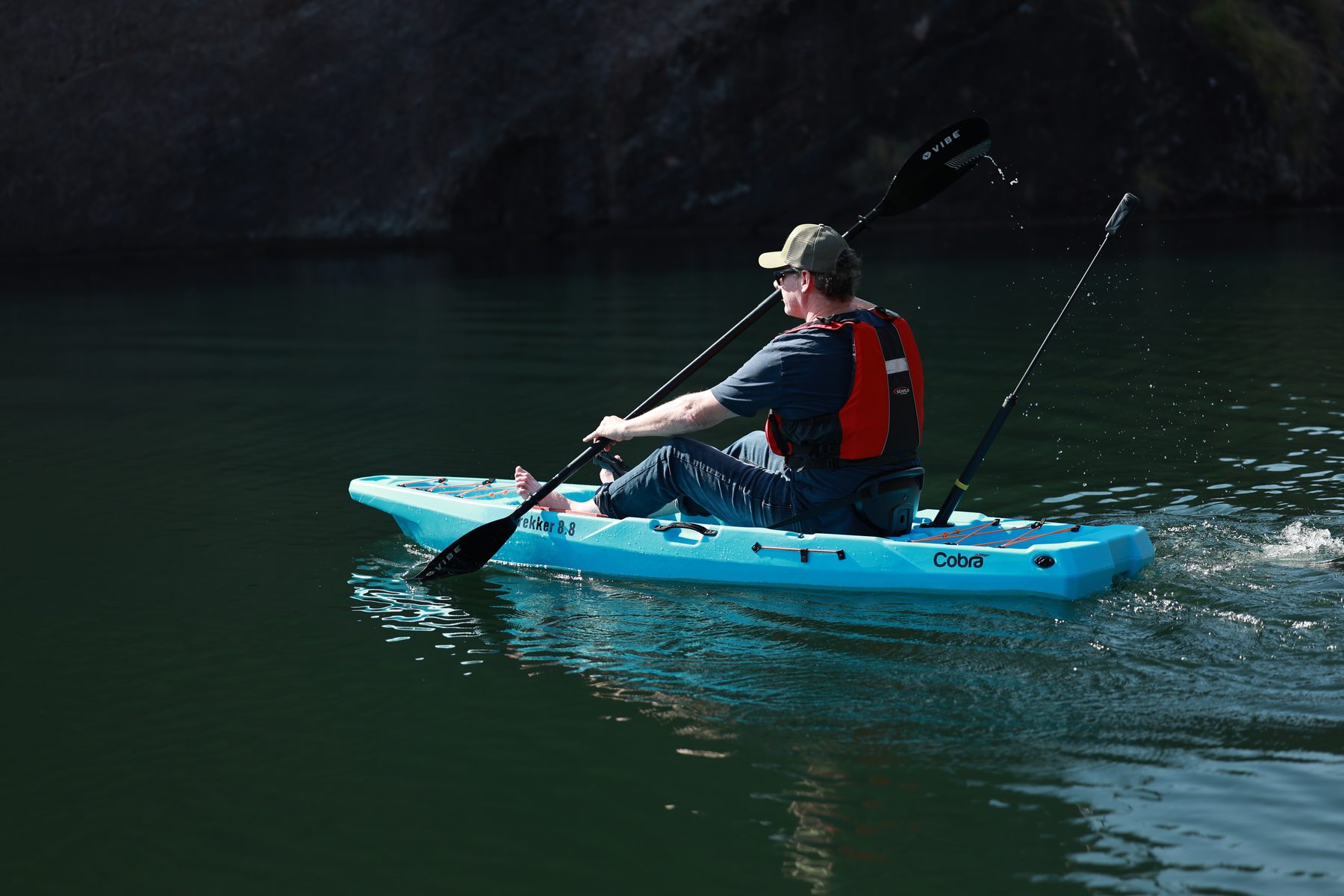
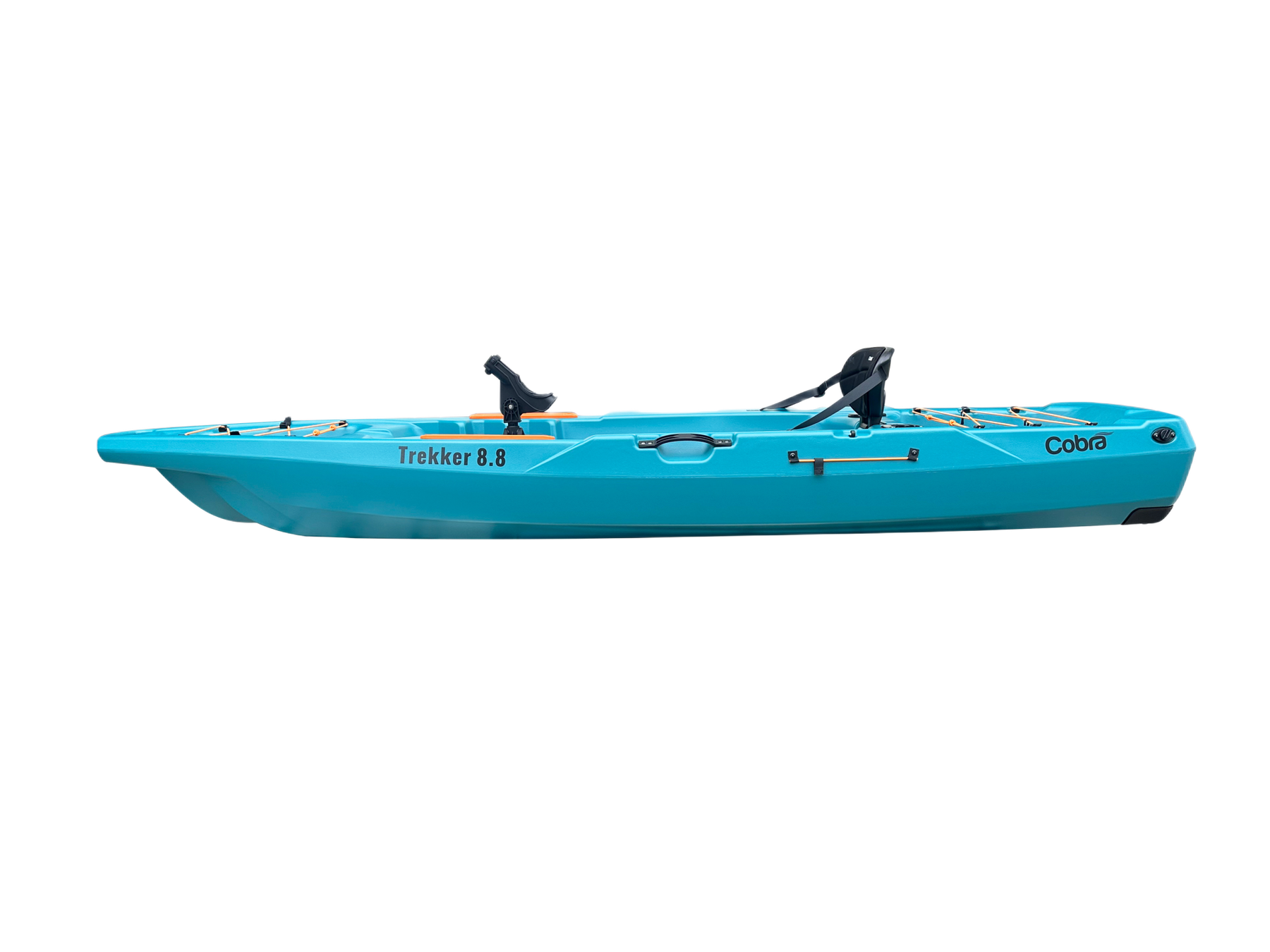
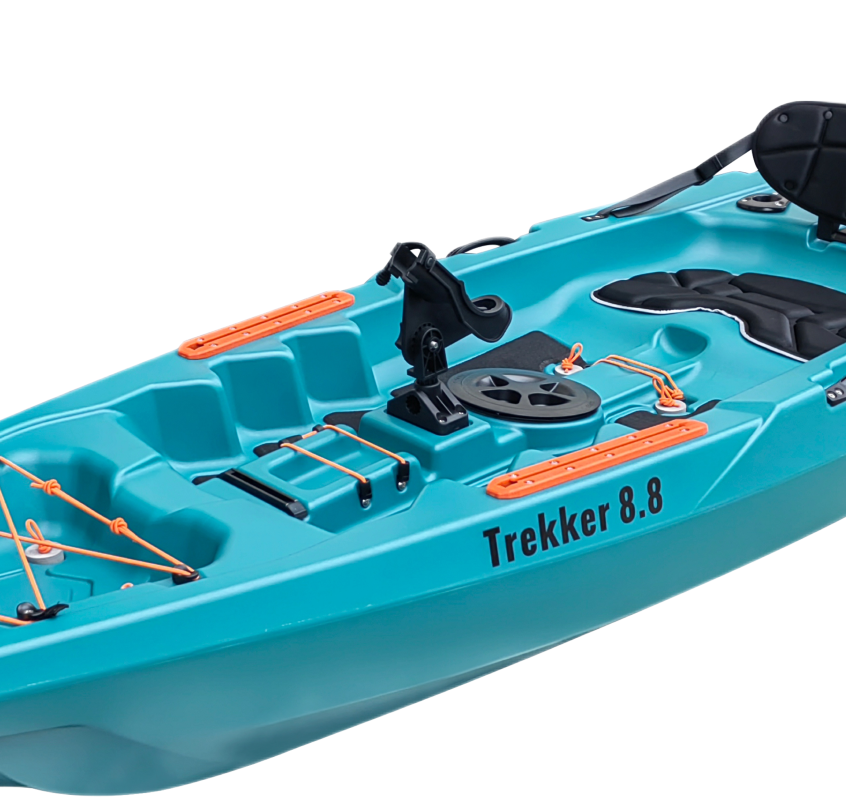
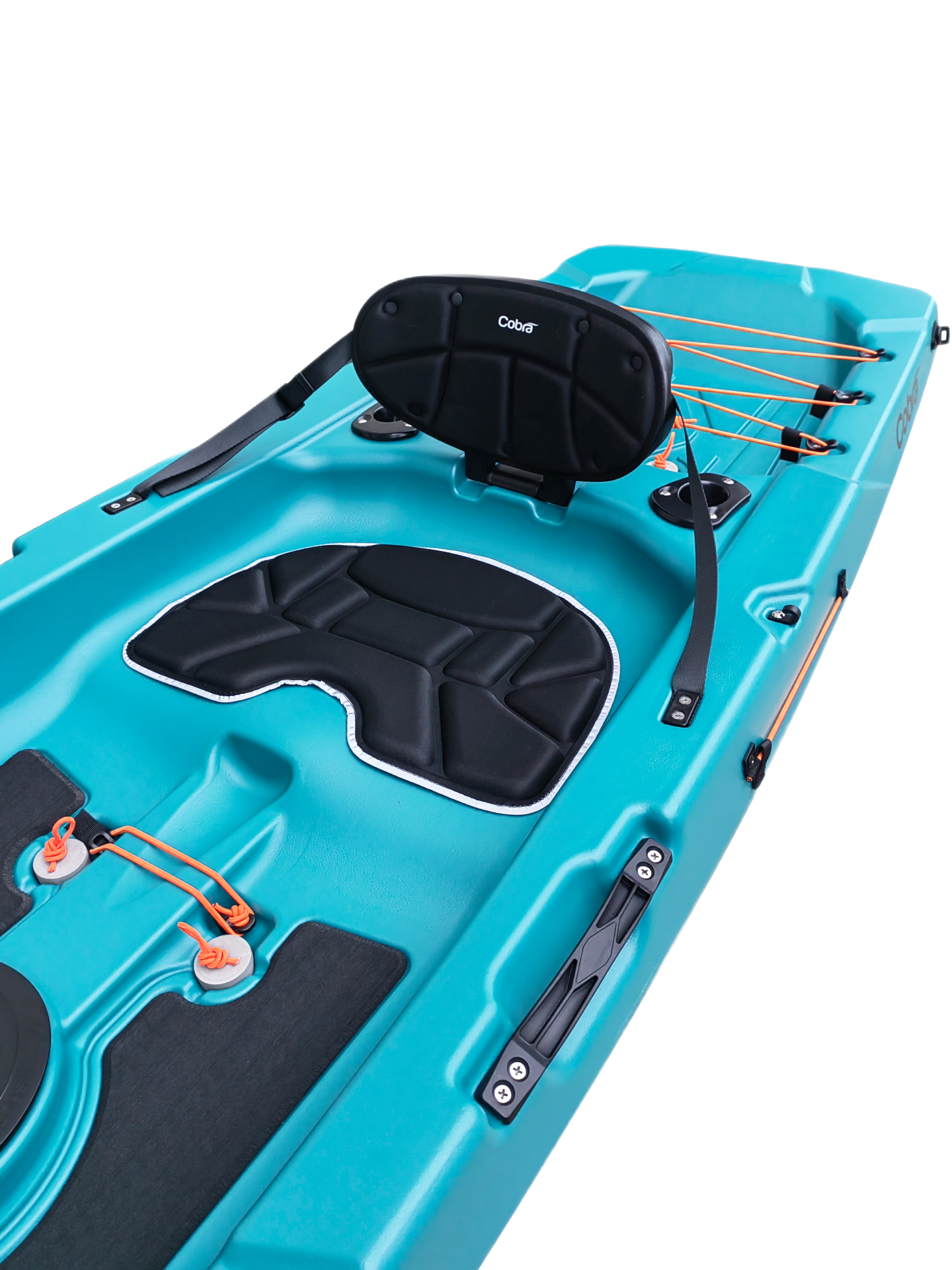
Cobra's signature kayak construction process. A heated plastic tube is inflated with air pressure inside a closed mold; the plastic expands to fill the mold and cools into a hollow hull. Different from rotomolding (Vibe's process, where powdered plastic is melted and tumbled inside a rotating mold) and Riot's Crossmax HDPE. Blowmolded hulls are lighter for the same size — which is what enables the Trekker 8.8's 47.4 lb weight — but slightly less impact-resistant than rotomolded equivalents. Plenty durable for cottage and calm-water use.
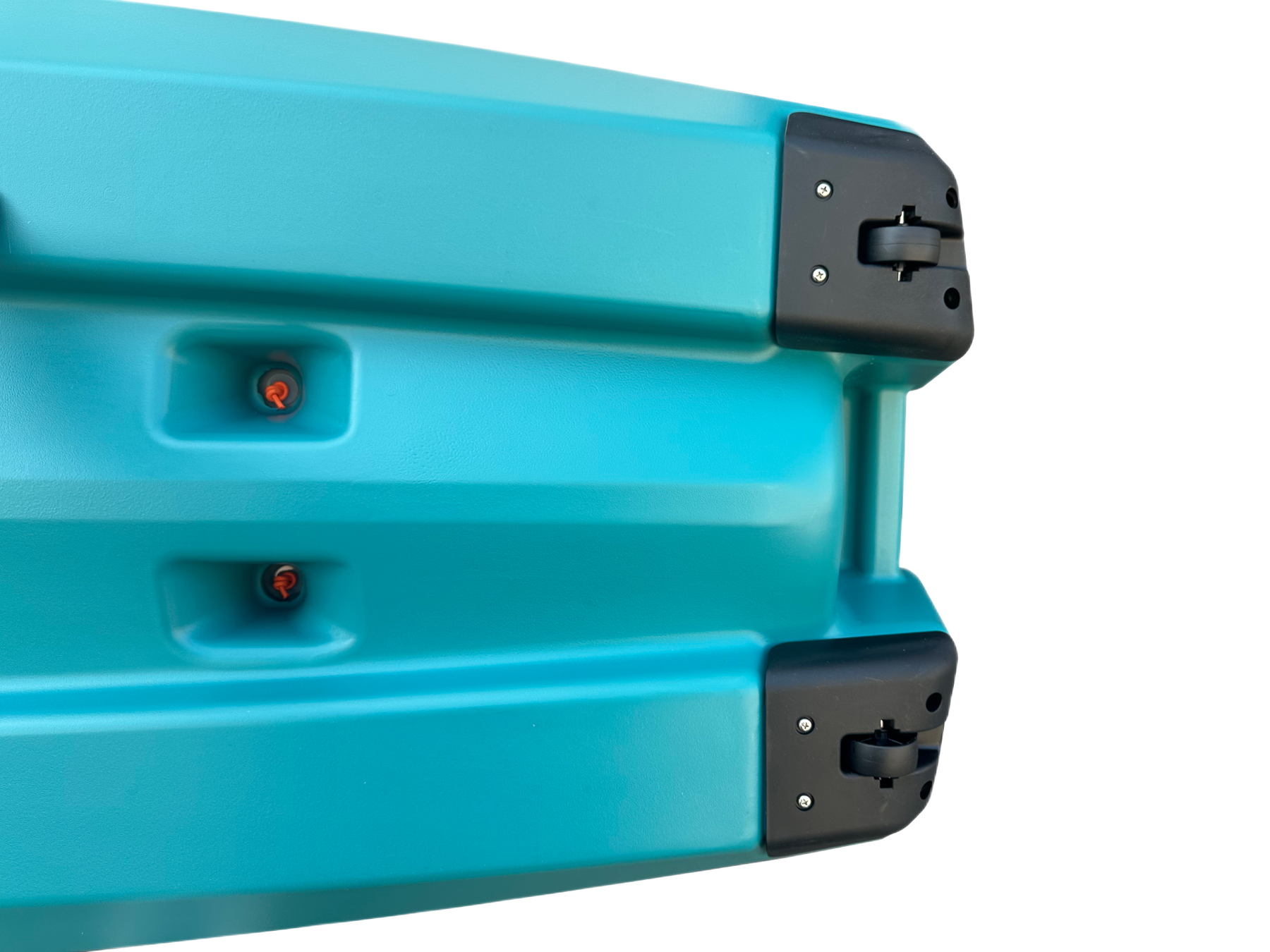
Built-In Wheels
Integrated wheels molded into the stern of the kayak — the customer tilts the bow and rolls the kayak from car to water like a suitcase, without buying a separate kayak cart ($60–$120 saved). The Cobra Trekker 8.8 is the only kayak in the SAIL store with this feature. Trade-off: the wheels create a small amount of drag when paddling (they're partially submerged) — most customers don't notice.